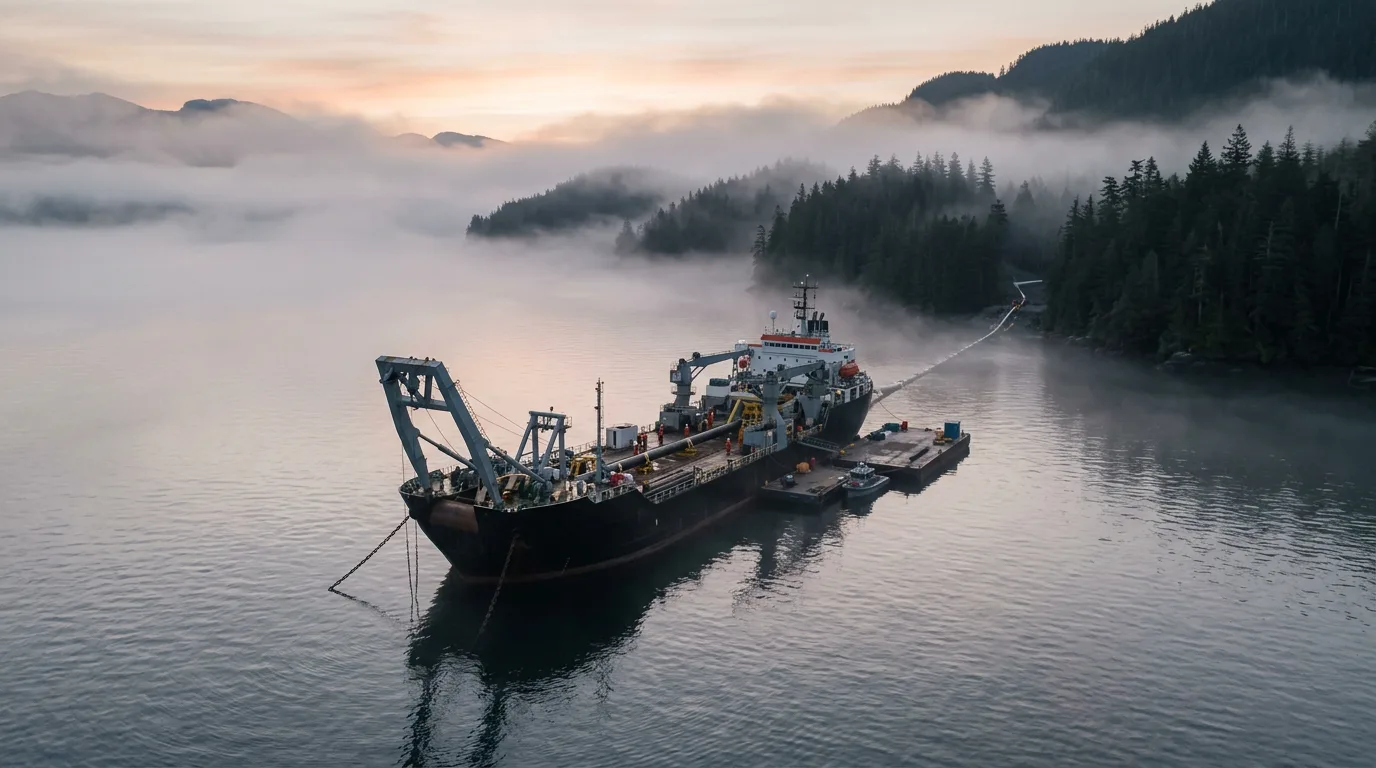
Belgian marine engineering group DEME has picked up a subcontract from offshore contractor Allseas to execute marine works on the Prince Rupert Gas Transmission project in British Columbia. DEME announced the award on Nov. 23. Under the deal, DEME will act as a second-tier subcontractor on the natural gas pipeline development, while Allseas remains the primary offshore contractor overseeing the overall marine installation phase.
The scope will be carried out by DEME's Offshore Energy segment and covers the offshore portion of the transmission pipeline. Project specifications released by the company put the route at 50 kilometers (31 miles) across Canadian coastal waters. DEME is responsible for both the shallow and deep sections of that marine corridor.
A further element of the package is the construction and integration of four landfall points where the subsea pipeline ties into onshore infrastructure. These connections mark the transition from the subsea line to the onshore system. Taken together, the route and the shore connections define the offshore marine scope awarded to DEME.
The wider project is being developed by NW Infrastructure Limited Partnership, a joint venture of Western LNG and the Nisga'a Nation. The award comes as North American developers continue to advance long-term export capacity meant to broaden the mix of international gas supply. Global markets are also tracking shifting supply dynamics, including the recent restart of key Libyan pipeline infrastructure.
For engineers and contractors tracking the buildout, the split of duties is now clearer: Allseas holds the top offshore role, with DEME executing the subsea route and shoreline tie-ins through its Offshore Energy unit. The available details did not specify which vessels DEME will deploy or when the marine campaign is scheduled. Those points will shape the next milestones for a project that forms part of a broader North American push to build export capacity.
Source: Pipeline Journal