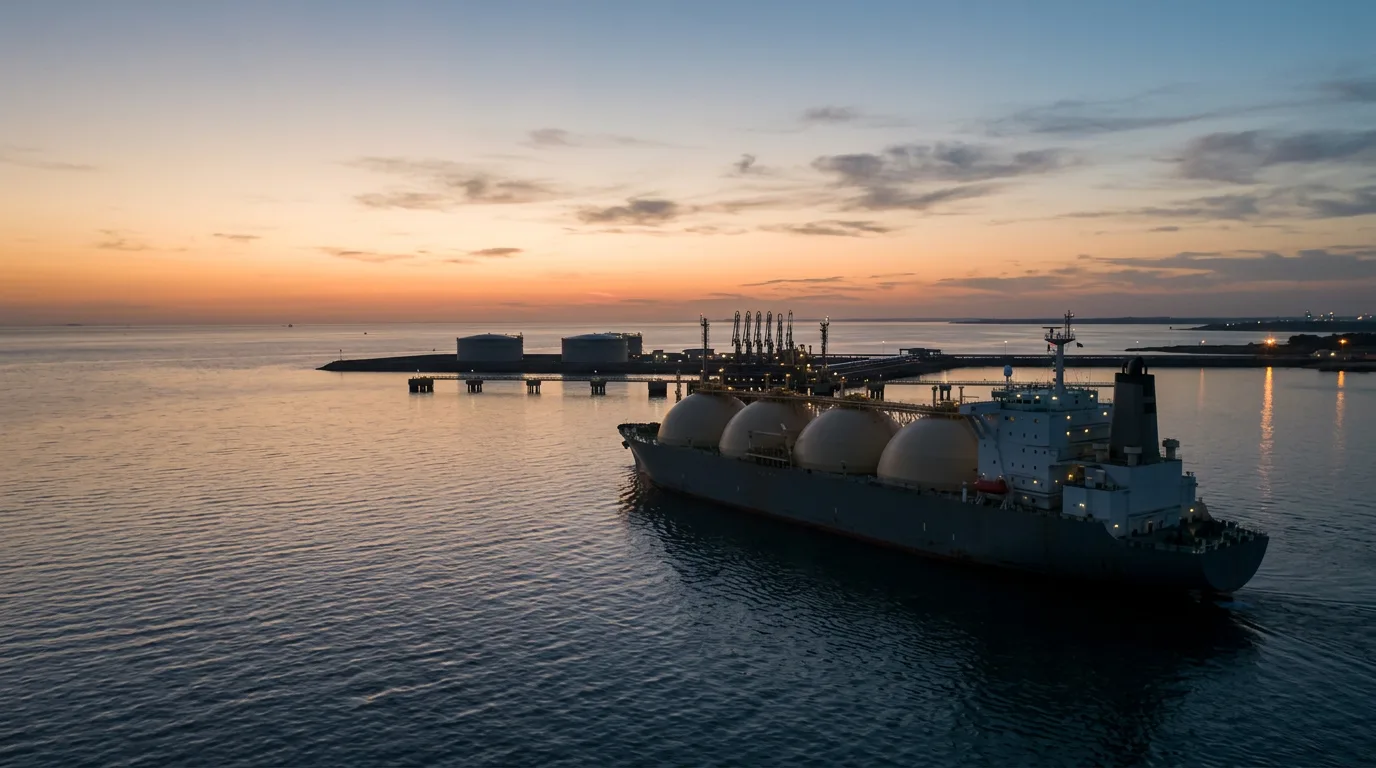
Dynagas LNG Partners has reported a slight dip in net income for the third quarter of this year, an outcome that leaves its quarterly earnings close to their previous level. The company operates a fleet of six LNG carriers, all of which are employed on long-term charters. The movement is small enough that the result is best read as nearly unchanged rather than a meaningful shift in performance.
The defining feature of the company's operations is its fleet of six LNG carriers, each working under long-term charter arrangements. That employment structure shapes how quarterly results behave: with vessels committed to charterers for extended periods, revenue arrives under agreed terms rather than being reset with each voyage or market swing. In that context, a dip of this size reads as a minor variance within a stable framework rather than a change in the company's operating position.
Long-term charters give owners contracted cash flow over extended horizons, placing vessels at the disposal of charterers that need committed shipping capacity for their cargo programs. For an operator with its entire fleet of six ships on such contracts, quarterly earnings largely reflect the terms agreed when those contracts were signed. That makes the third-quarter figure a measure of continuity: the modest decline points to earnings holding near their earlier level, with nothing in the report indicating a larger shift in the company's earnings pattern.
For the industry audience, the takeaway is one of steadiness at a single operator rather than a signal about the wider LNG shipping market. A fleet employed on long-term charters is structured to deliver a predictable earnings profile, and a marginal quarterly decline does little to alter that picture. The result underscores the role contracted employment plays in underpinning an LNG owner's financial performance, with the small dip in net income the only movement worth noting in an otherwise stable quarter.
Source: LNG Prime