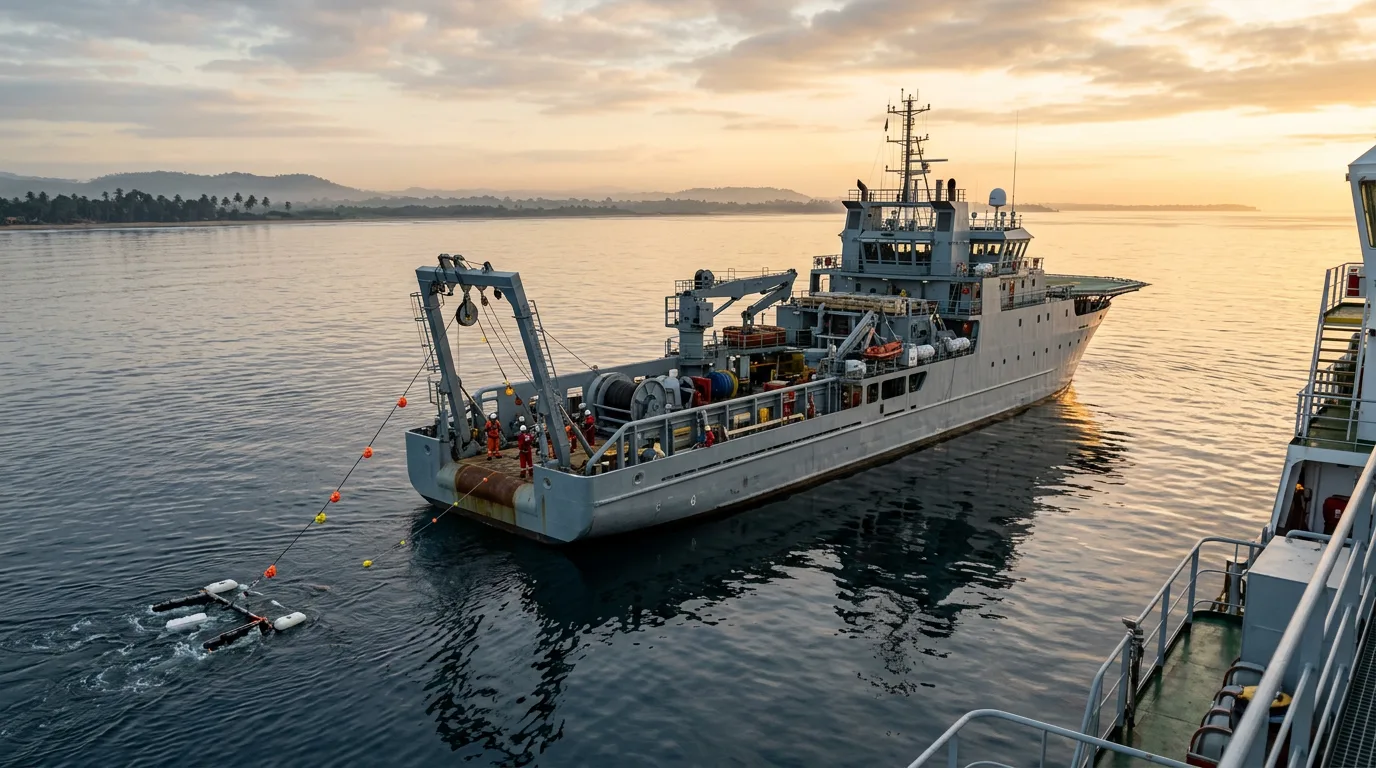
Seismic survey company SeaBird Exploration has secured a six-month contract for ocean bottom node (OBN) source work offshore West Africa. The award covers the Fulmar Explorer and extends employment for that vessel. SeaBird is a wholly owned subsidiary of SED Energy Holdings.
Ocean bottom node acquisition differs from conventional towed-streamer surveying in that the recording sensors are placed on the seabed rather than dragged behind a vessel. Because the receivers sit close to the geological targets, the method is often chosen where towed-streamer data gives a poor image, for example above complex structures or in waters crowded with platforms and other infrastructure. Source work is one half of such a campaign: the contracted vessel steams predefined lines, firing its seismic source on a set schedule, while the nodes themselves are generally handled by separate vessels that deploy and retrieve them from the seabed.
For a seismic contractor, a six-month award matters as much for vessel utilization as for the revenue it brings in. Ships in this segment carry high fixed costs, and idle days between projects weigh on earnings, so work that stretches a vessel's employment forward is a straightforward operational gain. The report accordingly gives as much weight to the extension of employment as to the award itself.
For the people running the vessel, the award translates into six months of planned activity in the region and a defined role within a node survey, firing the source while sensors on the seabed do the recording. For the wider seismic sector, it points to continuing demand for dedicated source capacity as operators lean on node-based acquisition for parts of their exploration programmes offshore West Africa.
Source: Offshore Engineer