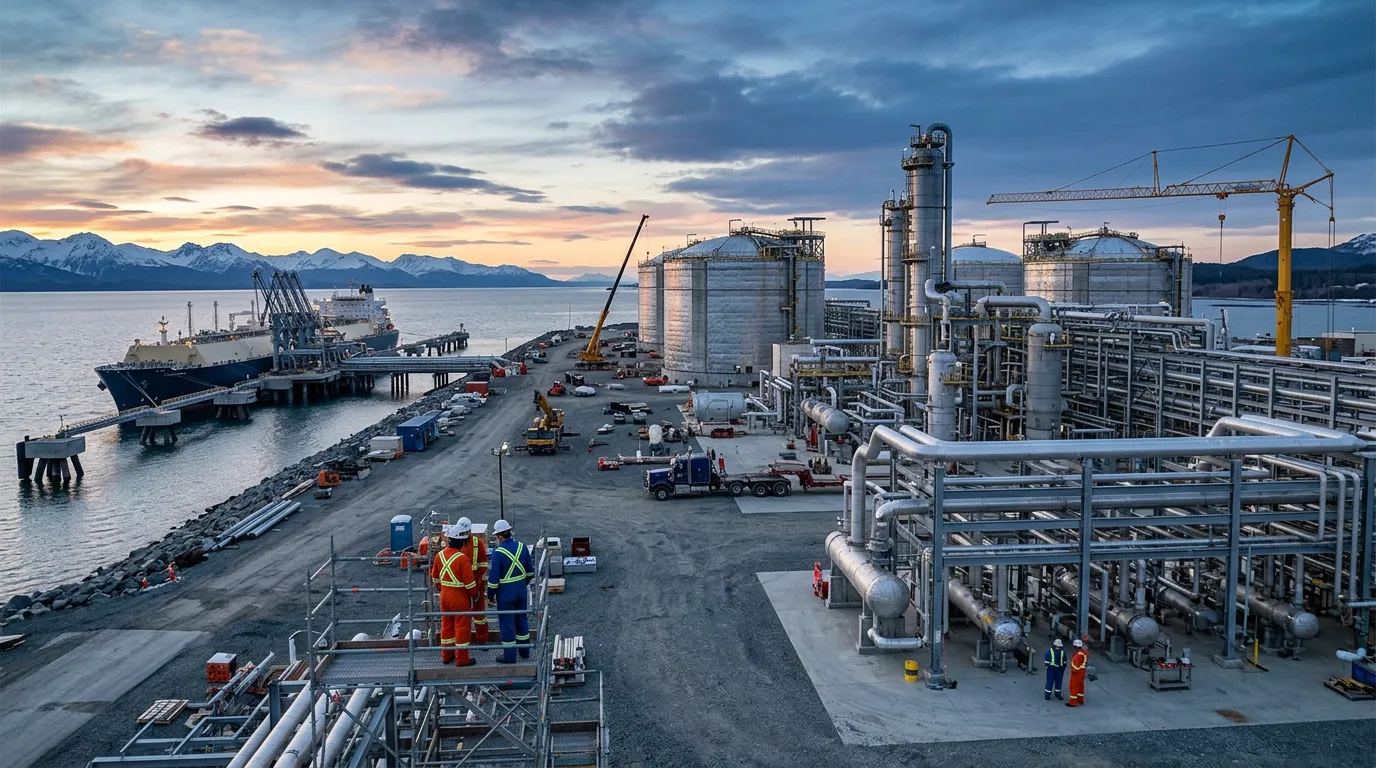
Alaska LNG, a project debated for decades and long held back by its cost and technical complexity, may have found the ingredient its economics have lacked: a prospective investor. Washington's tariff pressure is now doing what the project's commercial case alone has not, drawing foreign interest in financing one of the most expensive energy developments in the United States. The project has regained momentum under President Donald Trump.
The mechanism is trade leverage. Trump is using tariff threats to press foreign partners into backing the development, turning access to the US market into a bargaining chip. South Korea now sits at the centre of that effort, as Seoul's bid to protect its access to American markets becomes, in effect, a negotiation over financing the project.
The stakes run high on both sides. For Washington, securing foreign capital would advance a project that has struggled for decades to attract investors on commercial terms. For Seoul, participation could help preserve trade relations with the United States, though it would mean committing to a development whose economics have so far failed to secure backers on their own.
The open question is whether that pressure can translate into firm financial commitments. With a history of decades-long discussion, high costs and technical complexity, Alaska LNG has yet to demonstrate that political leverage can replace the investor interest its economics have not attracted on their own.
For the industry, the episode highlights an emerging route to project financing that rests on geopolitical leverage rather than conventional commercial appeal. Whether that model can carry a project of Alaska LNG's scale and cost remains unresolved. Operators and investors will be watching whether South Korea's engagement moves from negotiation to firm commitment.
Source: Oilprice