Pushing low-sulphur, high-cetane diesel into road-fuel markets usually asks more of a hydrotreater than desulphurisation alone would. Once the unit has to saturate aromatics, it runs hotter, burns more hydrogen, and its catalyst fades faster. Aromatic saturation is also equilibrium-limited at high temperature, so the end-of-run penalty is more than a shorter cycle. Cetane uplift can fall away just when the unit is hardest to run, and product colour can turn into a problem. Margin leaks out through hydrogen cost, early turnarounds, or off-spec diesel. The practical question is how to split catalyst, hydrogen and severity so the cetane target is met without eating the cycle.
Standards and requirements context
Road-diesel markets set the target through fuel specifications. The two most relevant are EN 590 (automotive diesel requirements and test methods) and ASTM D975 (diesel fuel specification). Both control sulphur and cetane quality, and both limit other properties that aromatic saturation moves, such as density and distillation. Cetane number comes from the engine method ASTM D613, with ISO 5165 as the ISO equivalent. A calculated cetane index such as ASTM D4737 is handy for routine control, but it is only a correlation. It can drift from the real cetane response when the feed shifts toward cracked stocks or when ring-opening chemistry changes the product. Whenever the feed slate changes, check any model-based cetane prediction against engine-method results.
Specifications set the destination. Cetane, density and colour decide how hard the unit has to be run to get there.
How cetane uplift actually happens
Aromatic saturation is the primary lever
As the EPTQ Q&A on diesel hydrotreater chemistry (2009) puts it, saturating aromatics is the key to boosting diesel cetane. Desulphurisation and denitrogenation clean up the feed but add comparatively little cetane. Converting aromatic rings to naphthenes is what does it. The two goals are linked, and that link should drive how the unit is managed.
Saturation also lowers density, which is why ULSD units show a volume gain. The AFPM Q&A on volume gain in ULSD units (Question 17) covers what sets that gain and how lowering space velocity increases it. Lower space velocity buys more saturation and more swell, but you pay for it with more hydrogen consumed and more heat released.
The thermodynamic ceiling
Aromatic saturation is exothermic and reversible. At low temperature, kinetics hold the reaction back. Raise the temperature to make up for deactivating catalyst, and equilibrium starts working against you.
For planning, that means you cannot reliably win back end-of-run cetane by adding temperature. If cetane is a hard constraint, design for it at the reactor-volume and hydrogen-pressure level. Don't count on temperature as the late-cycle lever.
Catalyst selection
The choice is between CoMo, NiMo, stacked or graded systems, and noble-metal second-stage catalysts. The table summarises the decision logic in qualitative terms.
| Catalyst approach | Strength | Limitation | Best fit |
|---|---|---|---|
| CoMo-dominant | Strong direct desulphurisation with relatively modest hydrogen use | Weakest aromatic saturation and cetane response | Units whose main job is sulphur removal on straight-run feed |
| NiMo-dominant | Higher hydrogenation activity, better aromatic saturation and nitrogen removal | Higher hydrogen consumption and heat release | Cracked-stock-rich feed, cetane-driven operation |
| Graded CoMo/NiMo stack | Balances hydrogen use against saturation | Needs careful sizing of each bed | Mixed objectives with hydrogen supply constraints |
| Noble-metal second stage | Deep saturation at lower temperature, which favours equilibrium | Requires very clean feed to the second stage (sulphur- and nitrogen-sensitive), so usually needs stripping or an interstage arrangement | New two-stage designs or revamps with a firm cetane or density target |
The sulphur sensitivity of noble-metal catalysts is established engineering knowledge, not a figure taken from the listed sources.
If LCO is a material fraction of the feed, hydrotreating alone will deliver cetane, but you will pay a high hydrogen price for it.
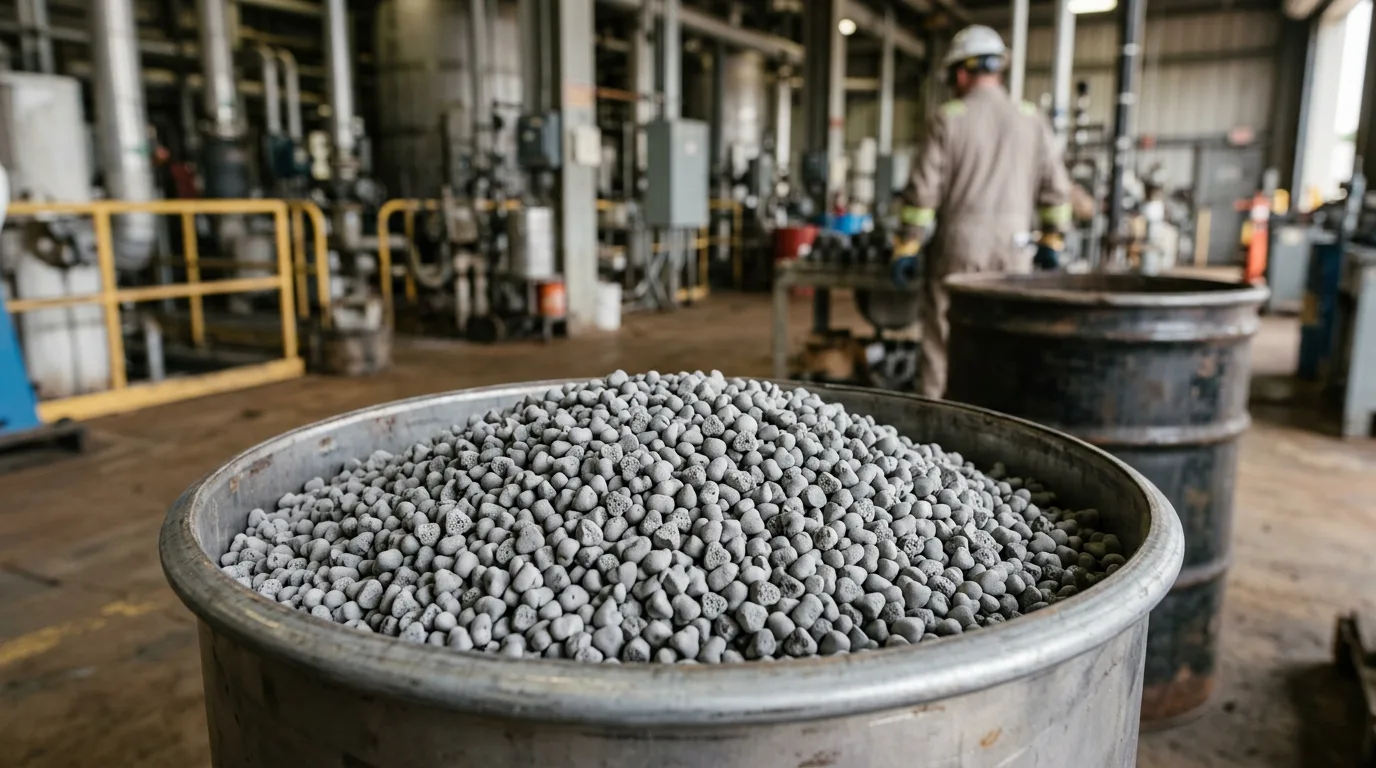
Rejuvenated catalyst in high-severity service
For procurement, judge rejuvenation on all three activities. A rejuvenated charge that recovers desulphurisation can still lag on saturation, and saturation is the property that matters for cetane. Ask for activity data on all three at your own conditions, not just sulphur removal.
Hydrogen management
Hydrogen is the real cost driver in high-severity operation, and the constraints lean on each other.
Partial pressure and recycle gas quality
Saturation likes high hydrogen partial pressure. H₂S inhibits it, and so do organic nitrogen compounds in the feed. The practical levers are:
- Recycle gas purity: keep light ends and inerts from building up, and purge deliberately if the make-up hydrogen is lean.
- H₂S in recycle: effective amine scrubbing protects saturation activity, particularly in the NiMo beds.
- Make-up capacity: confirm that the hydrogen plant and compression can carry peak consumption at the planned feed slate, not just at design feed.
Exotherm and quench
Saturation throws off heat. Quench gas has to be adequate to control the bed temperature rise. A hot bed speeds up coking, which shortens the cycle and pushes operation toward the equilibrium limit. Treat the bed outlet temperature profile and quench valve position as the leading indicators.
Refinery hydrogen balance
Raising severity on one unit pulls hydrogen from the whole network. Before you commit to a cetane target, confirm the extra draw won't starve a hydrocracker or another consumer. A cetane gain that the hydrogen system can't support is not a gain.
Run-length impacts
High-severity operation shortens cycles for four connected reasons.
- A higher start-of-run temperature to reach the saturation target leaves less temperature headroom before the equilibrium limit and the metallurgical or furnace limit.
- Cracked feeds bring nitrogen, diolefins and coke precursors that deactivate catalyst faster.
- Higher exotherms raise the risk of bed maldistribution and hot spots.
- Late-cycle colour deterioration may force an early end of run even if the catalyst could still desulphurise.
So the run-length question isn't "how long can the catalyst desulphurise?" It's "how long can it hold cetane and colour at an acceptable temperature?" Define end-of-run on the binding product property. Use the temperature trend to project it, and watch the rate of temperature rise as well as the absolute value.
Illustrative scenario
The following is illustrative, not a reported case. A refinery plans to raise cetane on a unit that currently runs mostly straight-run gas oil, and it intends to add a significant fraction of LCO. The unit is loaded mainly with CoMo and meets sulphur comfortably.
- The first trial shows sulphur on target but weak cetane response, which is consistent with CoMo's low saturation activity.
- Raising reactor temperature improves cetane at first. As the cycle ages, the gain flattens and product colour worsens, which matches the thermodynamic limitation Gunaseelan describes.
- The team weighs three options: reload with a NiMo-heavier graded stack, limit the LCO fraction, or route the LCO to a conversion unit better suited to cetane improvement, consistent with the Avantium observation on hydrocracking.
- The hydrogen balance review shows the NiMo option consumes substantially more hydrogen. The call comes down to comparing the cost of that hydrogen and the shorter cycle against the value of the cetane premium and the avoided purchase of cetane improver.
No numerical conclusion is drawn here, because the inputs depend on the site. The sequence is the useful part: test the cetane response, find the equilibrium limit, check the hydrogen balance, then choose the catalyst.
Practical checklist
- Confirm the cetane target is met by the engine method, and validate any calculated index against it whenever the feed slate changes.
- Characterise feed aromatics, nitrogen and cracked-stock fraction before choosing catalyst. LCO-rich feed changes the economics.
- Request activity data for desulphurisation, denitrogenation and aromatic saturation from catalyst suppliers, including for any rejuvenated catalyst.
- Check whether the loading scheme grades CoMo and NiMo appropriately for both sulphur and saturation duty.
- Verify hydrogen make-up and compression capacity at the heaviest planned feed, and confirm the effect on other hydrogen consumers.
- Monitor recycle gas purity and H₂S content, and maintain amine scrubber performance.
- Trend bed temperature rise, quench demand and radial temperature spread. Investigate sustained drift.
- Define end of run on cetane and colour, not only on sulphur.
- Evaluate ring opening or a second-stage option if the cetane target cannot be reached within the equilibrium limit.
- For any sampling, catalyst work or inspection on hydrocarbon-containing equipment, follow the site permit system. This means isolation, depressurisation, verification of zero energy, lockout/tagout, hazardous-area precautions, continuous gas detection, and routing of vented gas to a safe location. Treat spent catalyst with the pyrophoric and toxic-gas precautions in the supplier's handling guidance.
Conclusion
Cetane uplift in a diesel hydrotreater is an aromatic saturation problem. It runs into an equilibrium ceiling late in the cycle and into the refinery hydrogen balance throughout. Catalyst selection (NiMo weighting, graded stacks, or a second stage) should follow the feed's aromatic and cracked-stock content. Judge run length on cetane and colour, not sulphur alone.
As next steps, run a feed-specific saturation test or get supplier activity data. Check the hydrogen network against the planned severity. Then decide whether temperature alone, a revised loading, or a ring-opening or conversion route is the right way to meet the cetane target, before the next turnaround scope is fixed.