The cost of a cargo that never stops evaporating
An LNG carrier cannot stop its cargo from boiling. LNG sits at about −162 °C at atmospheric pressure, and every watt that leaks through the insulation or comes in through ship motion turns liquid into vapour. The owner then has to burn that vapour, reliquefy it, or vent it. Each choice affects speed, fuel bill, delivered cargo volume and the commercial relationship between owner and charterer.
Gard describes boil-off as a growing source of legal and commercial disputes as LNG carriers evolve. Its framing is that cargo is becoming fuel. Two ships can look alike on a vessel list and still handle boil-off very differently, and then the cheaper hire rate turns out to be the dearer ship. This article looks at how containment, propulsion and reliquefaction choices feed into charter economics, so that logistics and process engineers know what to ask owners and brokers.
Standards and contractual context
Several frameworks govern what a vessel may do with boil-off gas:
- IGC Code (the International Code of the Construction and Equipment of Ships Carrying Liquefied Gases in Bulk) covers cargo containment, pressure and vapour management, and cargo machinery design on gas carriers.
- IGF Code (the International Code of Safety for Ships Using Gases or other Low-flashpoint Fuels) applies when gas is used as ship fuel. It comes into play once propulsion draws gas from the cargo system.
- MARPOL Annex VI sets the emissions framework. That framework determines how attractive gas is against oil fuel in a given trading area.
- The charterparty is where boil-off performance becomes enforceable. Steamship Mutual's discussion of LNG charterparty features around vessel delivery makes the point that the vessel's condition and cargo-related particulars are contractual matters from the moment of delivery.
The Bureau Veritas modern LNG carrier technology report covers the engineering side, from containment through propulsion, subcooling and reliquefaction.
Boil-off fundamentals
GTT's LNG Optim material splits boil-off into two components:
- Static boil-off depends on the ship's design, mainly the insulation and tank configuration. It happens whether the ship is moving or sitting still.
- Dynamic boil-off depends on how the ship is operated and what conditions it meets. Motion in a seaway agitates the cargo and adds energy, so dynamic boil-off changes from one voyage to the next.
GTT states that boil-off is directly related to the economics of LNG transportation. For a planner, the contractual boil-off figure is a design property. The boil-off you actually get depends on route, weather, loading condition and how the crew run the plant.
Membrane versus Moss: what the containment choice does
Membrane tanks
Membrane systems use a thin metallic barrier backed by insulation fitted to the hull structure. The tanks follow the hull shape, so cargo capacity per unit of hull volume is high. The trade-offs:
- Insulation performance sets the static boil-off. Newer insulation designs have narrowed the historical gap to spherical tanks.
- Partially filled tanks expose the containment to sloshing. That has to be managed through loading restrictions and the vessel's design basis.
- The cargo system is part of the hull itself, so there is less visible separation between tank and structure.
Moss spherical tanks
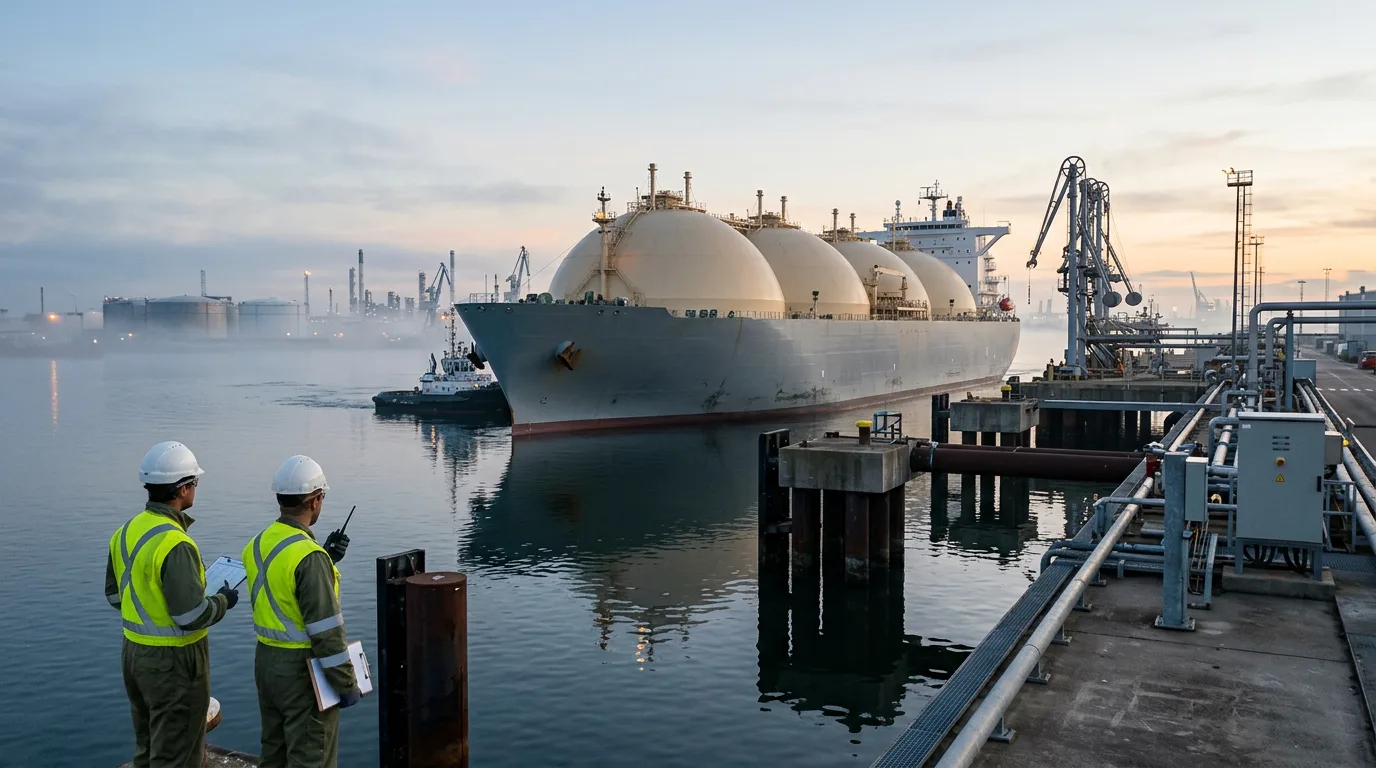
Moss vessels carry free-standing spherical tanks that handle partial loading and sloshing well. The drawbacks are commercial and operational:
- For its overall size, the ship carries less cargo than a membrane ship. The tanks stand above the deck, which affects windage and port compatibility.
- Boil-off performance is good, but per-voyage economics are often judged on cargo delivered relative to hire.
Practical reading
Don't rank the two containment types on boil-off alone. Compare the guaranteed boil-off figure, cargo capacity, partial-loading flexibility and what the vessel does with its vapour. A membrane ship with strong reliquefaction can beat a Moss ship that has to burn or vent vapour in a poor propulsion arrangement. The reverse also holds: a Moss ship with good insulation and a steam plant may suit a trade where boil-off gets burned steadily in the boilers.
Propulsion: where boil-off becomes a fuel bill
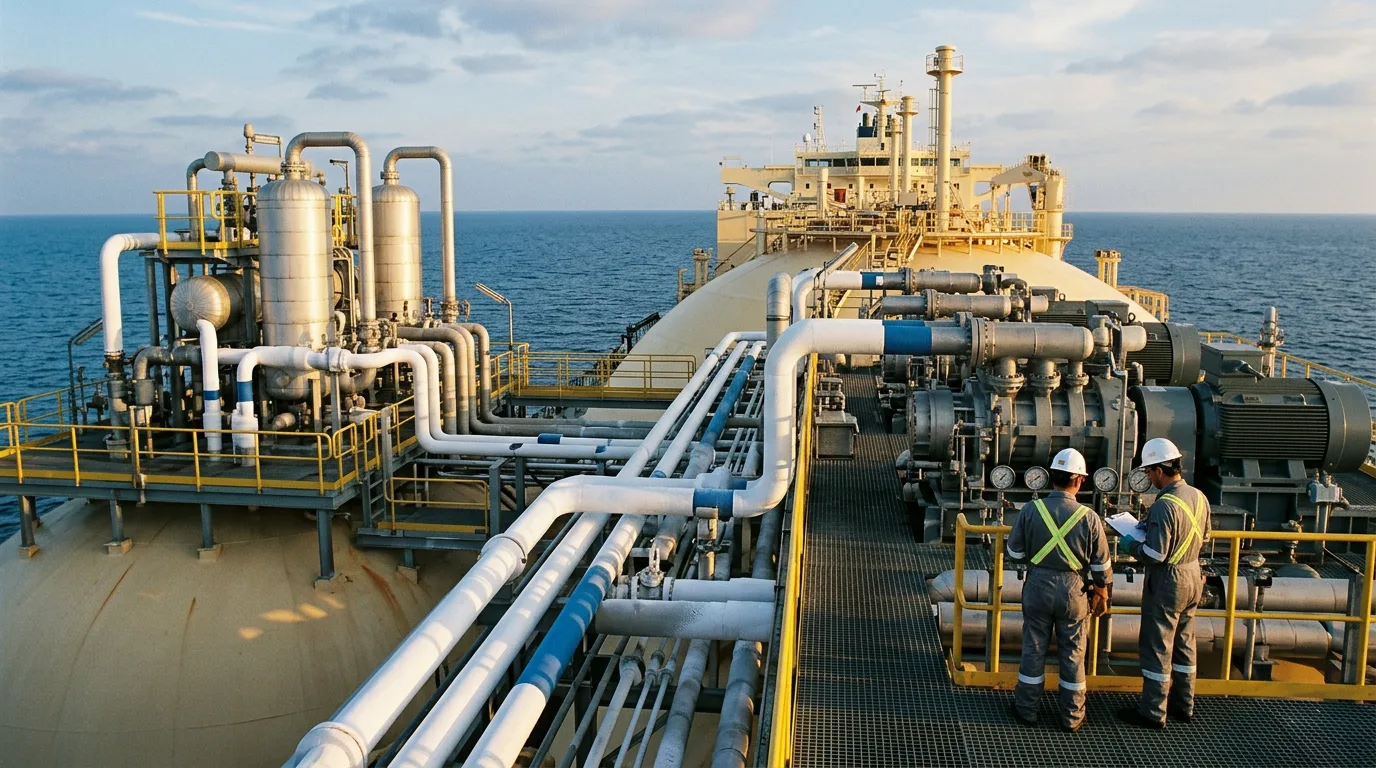
Propulsion decides how much of the boil-off the ship can put to productive use, and so how much arrives as cargo.
| Feature | Steam turbine (ST) | Dual-fuel diesel electric (DFDE) | Two-stroke gas-capable engine with reliquefaction |
|---|---|---|---|
| Use of boil-off | Burned in boilers | Burned in dual-fuel generators | Burned in engine, with surplus reliquefied |
| Handling of surplus vapour | Limited to burning or disposal | Burn or dispose | Reliquefy and return to tanks |
| Position in the market | Older tonnage, often discounted | Intermediate | Modern tonnage, commands a premium |
| Speed on boil-off alone | Tied to boiler capacity | Tied to generation demand | Flexible, with fuel-choice options |
| Commercial risk | Higher fuel and cargo loss | Moderate | Reliquefaction plant reliability and power demand |
A 2018 Oxford Institute for Energy Studies report on LNG shipping costs noted that ST charter rates had fallen below those of DFDE vessels, attributing this to cost comparison between the two propulsion types. However, this source predates current market conditions and should be verified against recent data.
The offshoreindustry.co.uk guide goes further. It argues the market has built these differences into price: a vessel's effective daily cost is hire plus fuel plus boil-off value. It also says the gap between an older steam ship, with high boil-off and poor efficiency, and a modern two-stroke vessel with partial reliquefaction is now wide enough that the steam fleet has been pushed to the margins of the market.
Fuel choice and speed
Speed feeds back into charter cost and into whether a ship can reach its destination in time for premium spot prices. Speed also sets how long the cargo is exposed to heat ingress, and the fuel choice determines how that exposure gets paid for.
Reliquefaction
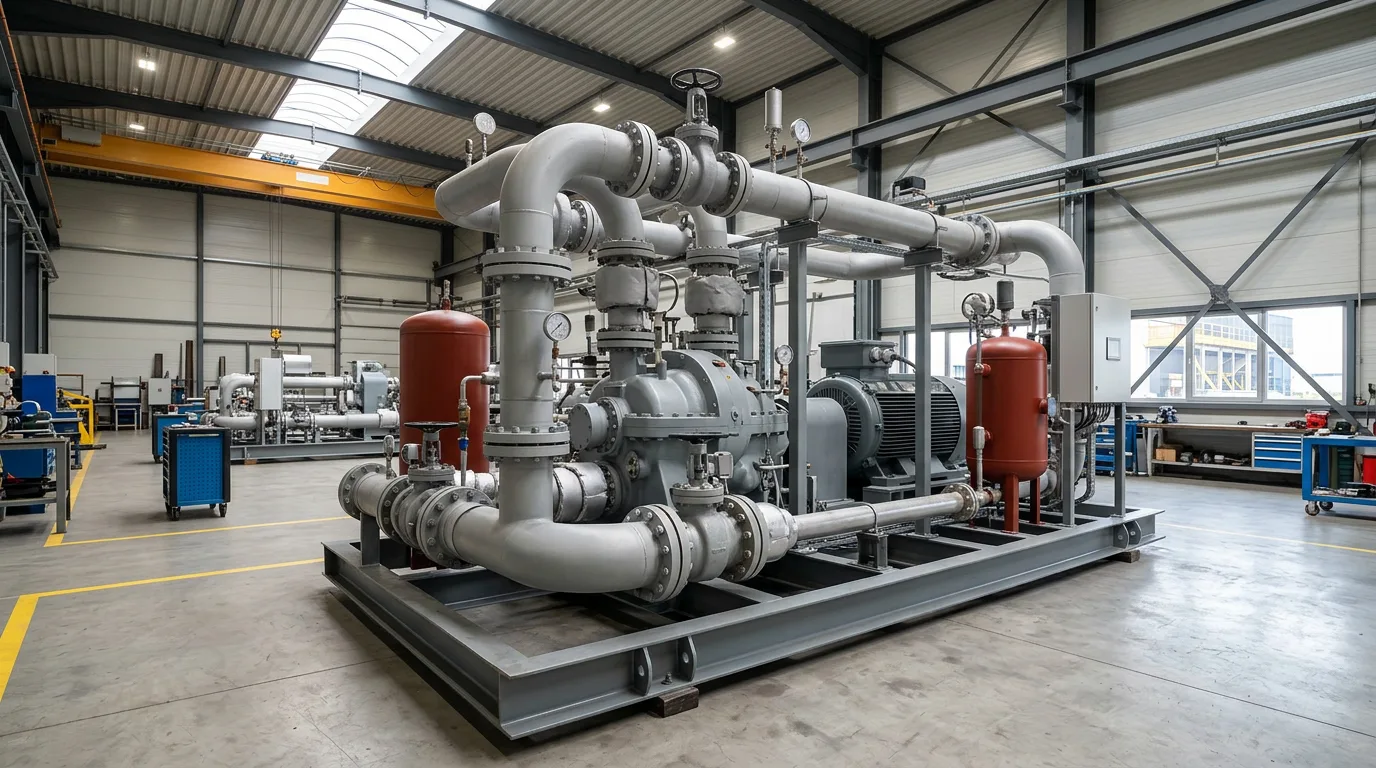
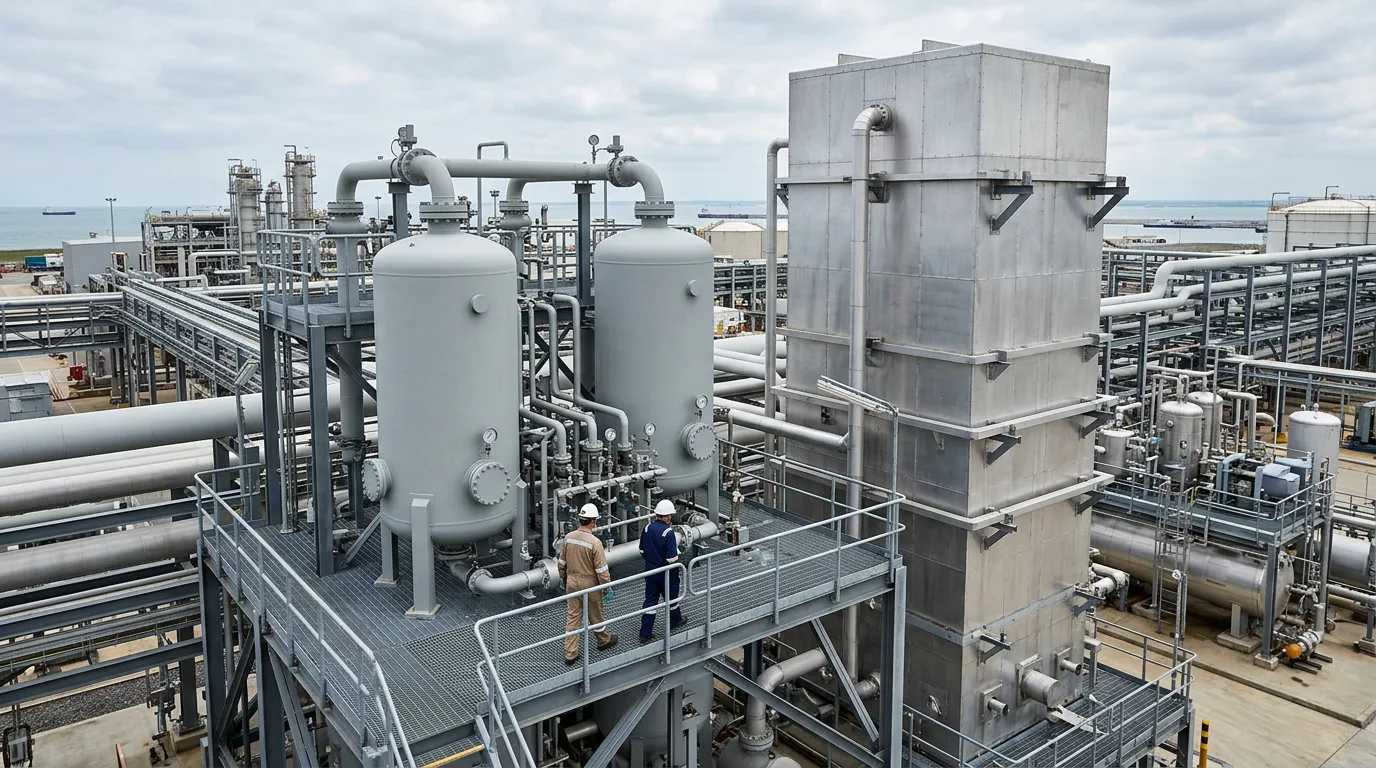
Reliquefaction turns vapour back into liquid and returns it to the tanks. It takes electrical or mechanical power and adds machinery to maintain. In return, the ship delivers cargo that would otherwise have been burned. It also decouples speed from boil-off rate, which gives the operator more control. Gard's article on boil-off and reliquefaction describes the added complexity, including how responsibility for cargo used as fuel is handled contractually.
Illustrative example: the speed trade-off
This scenario is illustrative. The distance is an assumed round number, and the speeds are the figures reported by Timera Energy.
Assumptions: voyage distance D = 10,000 nautical miles; speed on boil-off alone v₁ = 14 knots; speed on HFO or forced boil-off v₂ = 19 knots. One knot is one nautical mile per hour.
- Formula: time = distance ÷ speed.
- At 14 knots: 10,000 nm ÷ 14 nm/h = 714.3 h, and 714.3 h ÷ 24 h/day = 29.8 days.
- At 19 knots: 10,000 nm ÷ 19 nm/h = 526.3 h, and 526.3 h ÷ 24 h/day = 21.9 days.
- Difference: 29.8 − 21.9 = 7.8 days.
Result: on this assumed voyage, the faster fuel regime saves about 7.8 days. What those days are worth depends on the hire rate, the price spread at the destination, and what the faster regime costs in HFO or forced boil-off. None of those inputs is given here, so no net answer is claimed.
The same ship has two different cost profiles depending on how it is run. Slow steaming on boil-off alone uses cargo that would otherwise evaporate, and the extra voyage days get paid for in hire. Fast steaming shortens the hire period but adds fuel cost, or burns cargo that could have been sold. A vessel that can reliquefy surplus vapour shifts the balance further, because more of the cargo makes it through to discharge.
How this shows up in charter rates
Three mechanisms connect boil-off performance to the rate a charterer will accept:
- Hire discount for inefficient tonnage. The market prices in higher fuel and boil-off cost. That is why steam ships trade below DFDE and modern two-stroke vessels, as the OIES and offshoreindustry.co.uk sources describe.
- Warranty structure. Owners warrant speed and consumption, and often boil-off. How the warranty is worded decides who carries the weather and operational variation that makes up dynamic boil-off.
- Capability beyond the headline. The Induera article on LNG shipping expertise says two ships can look comparable at first sight. Expert input adds the most value before commercial terms harden around an incomplete picture of what the vessel can do.
Decision checklist for vessel selection
- Ask for the guaranteed boil-off figure and the conditions it applies to: loading state, sea state, speed.
- Establish how static and dynamic boil-off are separated in the contract, using the framework in GTT's LNG Optim.
- Confirm whether the propulsion plant can burn all expected boil-off at the planned speed, and what happens to the surplus.
- Check whether reliquefaction is fitted, its capacity against expected surplus vapour, and its power demand.
- Compare speed on boil-off alone with speed on alternative fuel for your route, as in the Timera Energy comparison.
- Calculate effective daily cost as hire plus fuel plus boil-off value, not hire alone.
- Review the delivery condition provisions with legal advisers, using the Steamship Mutual guidance on LNG charterparties as a starting point.
- Establish who bears cargo used as fuel and how it is measured, given the dispute risk Gard describes.
- Ask how partial-load voyages are handled, particularly for membrane ships.
- Check the vessel's maintenance record on cargo compressors and reliquefaction equipment. Any work on this equipment needs isolation, depressurisation, verification of zero energy, lock-out/tag-out, gas detection and hazardous-area controls before it is opened.
- Involve a technical adviser before terms are fixed, not after.
Conclusion
Boil-off ties together containment, propulsion and the charter contract. Membrane and Moss designs differ in capacity, partial-loading behaviour and static boil-off. But the propulsion plant and any reliquefaction capacity decide how much of the vapour becomes useful fuel and how much is lost. The market has priced that difference in, with older steam tonnage discounted against DFDE and modern two-stroke ships.
For your next fixture, build the effective daily cost from hire, fuel and boil-off value for each candidate vessel. Run your own route distances through the speed comparison, and have a technical adviser review the warranty wording before terms are agreed. That should show clearly whether the lower hire rate is actually the lower cost.