Managed Pressure Drilling for Narrow Mud-Weight Windows: Equipment and Well Selection
A narrow mud-weight window will kill a well before the bit ever sees TD. Squeeze the gap between pore pressure and fracture gradient far enough and a single mud-weight increment does one of two things: it takes a kick, or it breaks the formation. Conventional drilling has no third option. What follows is the familiar grind — kicks, losses, sidetracks, NPT — and it eats a big share of the AFE. Managed pressure drilling (MPD) goes at the problem directly: it moves pressure control off the static fluid column and onto a dynamic, surface-regulated system. But deploying it drags in its own engineering and logistics burden, and that has to be worked out before the rig contract is signed.
Defining the Problem: When the Window Becomes Critical
Pore pressure sets the bottom of the mud-weight window. The fracture gradient of the weakest exposed formation sets the top. FITs and leak-off tests pin down the upper boundary. FPWD measurements define the lower one, with better resolution than you get from interpolating offset wells alone.
Now narrow the window until ECD during normal drilling is already sitting on the fracture gradient — or through it. The engineer gets two choices. Set an additional casing string, eat the cost, and probably lose hole size. Or bring in a technique that actively manages annular pressure throughout the drilling operation. That second one is MPD.
The Surface Backpressure Control Loop
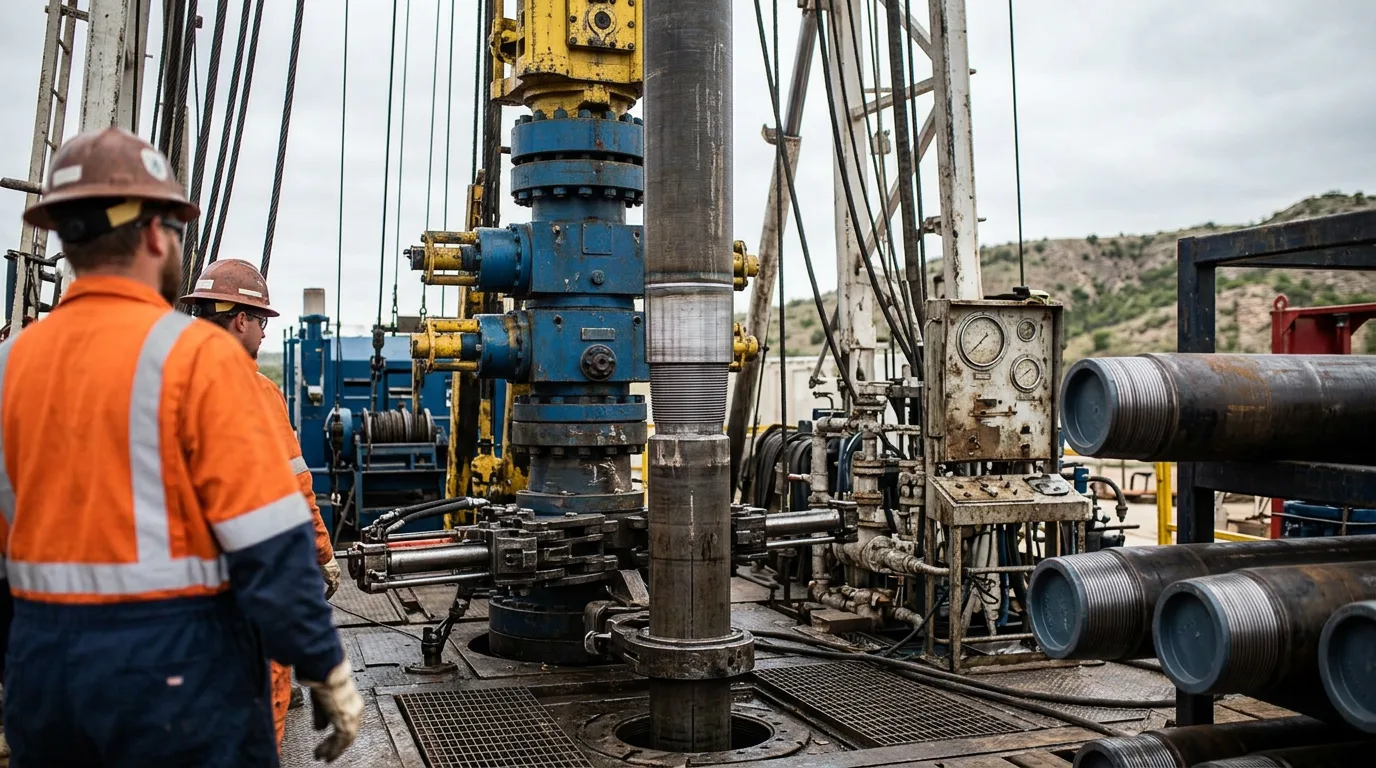
Strip it down and a closed-loop MPD system is an RCD, a choke manifold, and a real-time hydraulics model. The RCD seals the annulus at surface. What used to be an open system becomes one you can pressurise on purpose.
How the Loop Works
- Returns go through a dedicated choke manifold instead of the conventional bell nipple path.
- An automated choke adjusts backpressure to hold a target BHP. Control comes from a programmable logic controller reading standpipe pressure, return flow rate, and a real-time hydraulics model.
- Pumps stop on a connection, ECD drops, and the choke closes incrementally to compensate. BHP stays inside a narrow target band.
- Flow-out rate moves off target, the choke responds immediately — well before a conventional surface detection would flag a kick or a loss.
Weatherford's Modus Managed Pressure Wells Solution wraps this loop into automated well control logic: RCD, choke manifold, flow measurement, and a hydraulics simulator, all as one managed system. The automation matters. In HPHT wells with ultra-narrow windows, a manual choke operator simply can't react fast enough to keep BHP from wandering during transients — connections, pipe movement, pump start-up.
The same paper noted that the manganese tetroxide system provided a higher-density fluid with lower rheological impact on ECD — which is another way of saying MPD equipment selection and fluid selection are interdependent decisions.
Equipment Components and Rig-Up Constraints
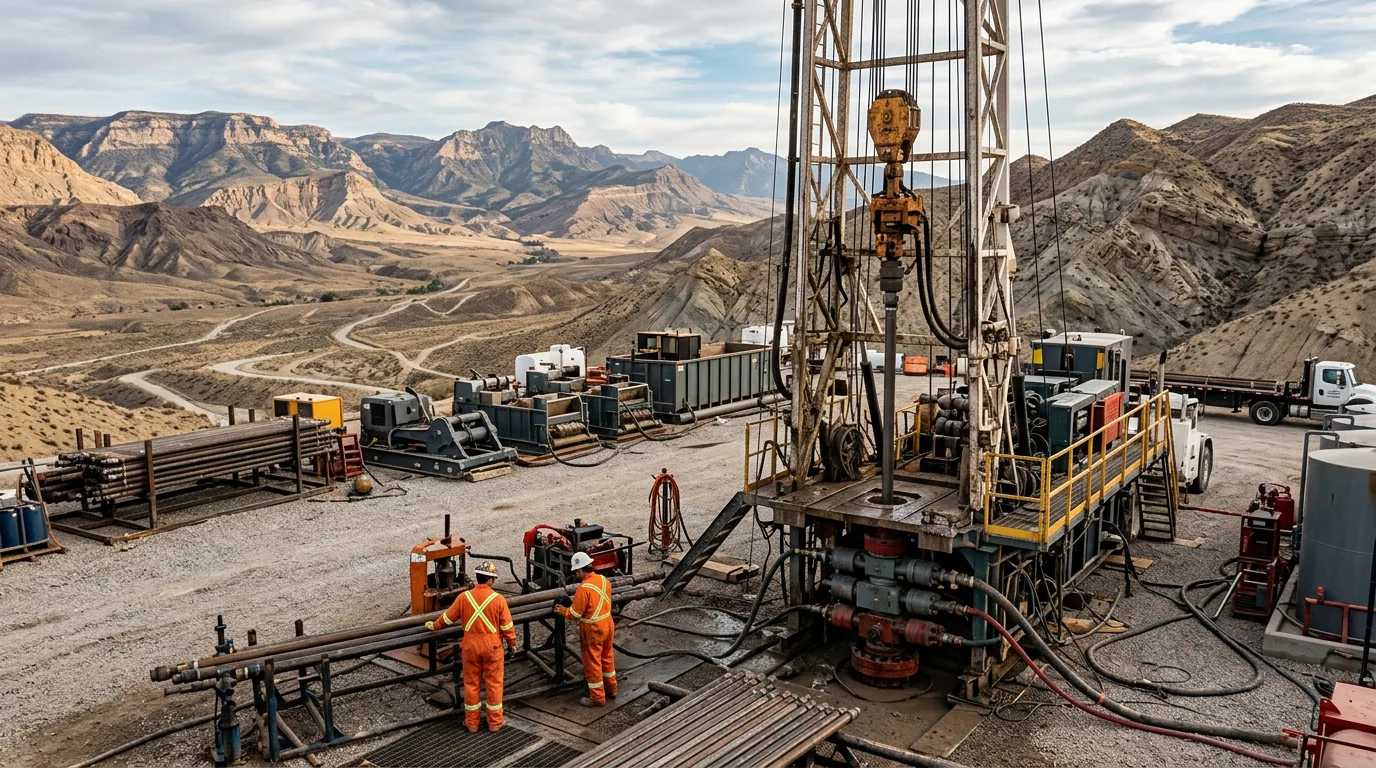
Core Equipment List
- Rotating control device (RCD): Pressure-rated to the anticipated wellhead working pressure. Passive and active RCD designs differ in how the sealing element engages. Active designs hold seal integrity under varying pipe OD, which is why they get the nod for HPHT.
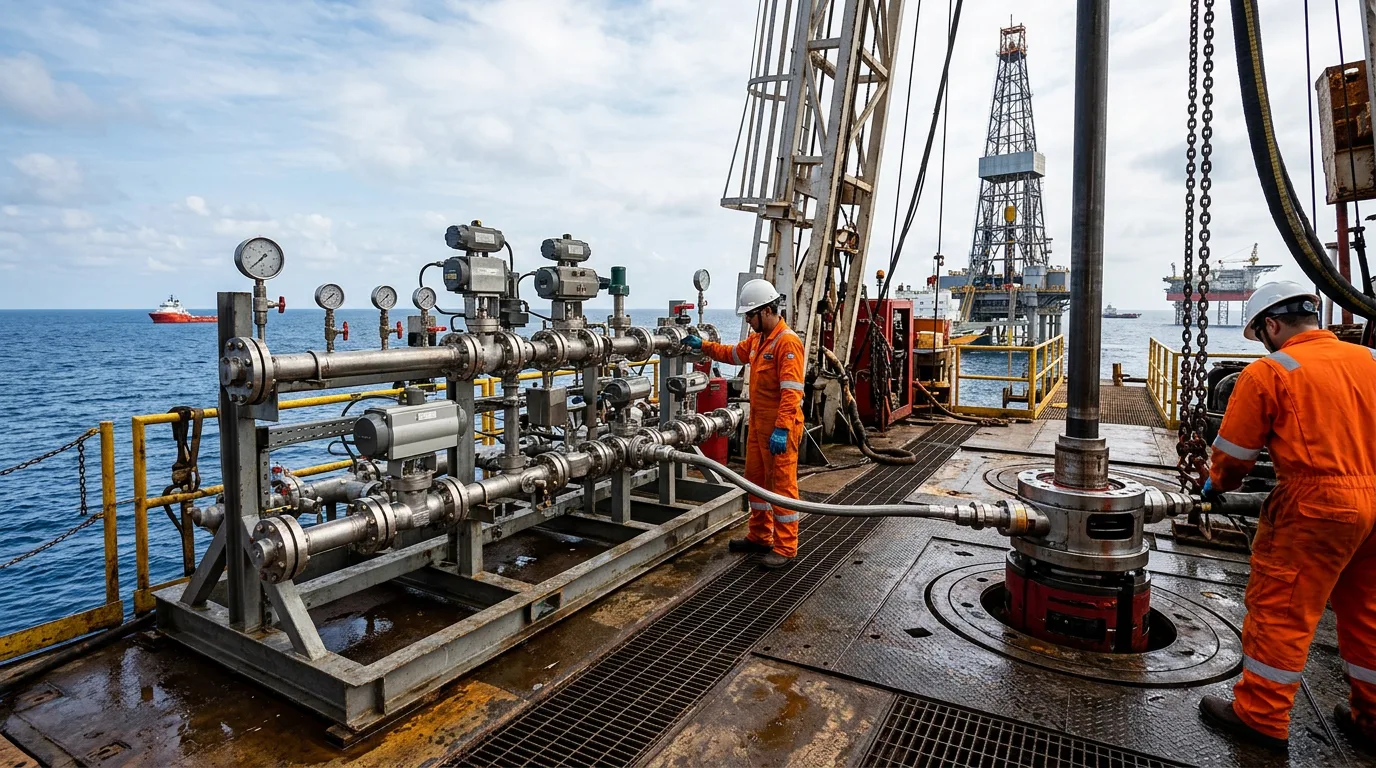
- Automated choke manifold: Dual-choke configuration for redundancy. If sour service is expected, the manifold must be rated for the anticipated H₂S and CO₂ partial pressures.
- Real-time hydraulics model: Continuous BHP calculation from measured pump rate, mud weight, temperature, and rheology. Let the fluid properties go stale and accuracy falls off.
- Coriolis or high-accuracy flow meter: Return flow measurement is your primary kick/loss detection sensor. Coriolis meters give mass flow and density at the same time, which sharpens early detection.
- Data acquisition and control system: Ties every sensor input together and drives the automated choke. Keep the latency between a sensor reading and the choke response as short as you can.
Rig-Up Constraints on MODUs
Put MPD on a MODU and you pick up constraints that don't exist on land.
- Deck space: Choke manifold, RCD handling tools, control cabins — all of it needs dedicated deck area, and it's competing with everything else on the rig. On a semisubmersible this usually means pre-job deck layout planning with the rig contractor.
- Riser integration: RCD goes below the telescopic joint, above the diverter housing. Check riser configuration and tensioner capacity against the added weight and moment loads.
- Riser gas handling: Returns off the choke manifold have to reach the mud-gas separator and go overboard safely. Routing through existing rig piping may need temporary spool pieces and extra gas detection.
- Regulatory notification: In US waters, BSEE requires notification and approval for MPD operations. Start that process well before spud.
Well Selection Criteria
A tight mud-weight window alone doesn't justify MPD. Run the cost and complexity of deployment against what you'd do instead.
| Criterion | Favour MPD | Favour Conventional Alternative |
|---|---|---|
| Window width | Insufficient margin for ECD variation | Adequate margin with optimised hydraulics |
| Casing program impact | Additional string would sacrifice hole size or reach TD | Casing point can be set without penalty |
| Formation type | Competent, predictable fracture gradient | Highly variable or uncertain gradient |
| Well type | HPHT, deepwater, extended reach | Shallow, low-pressure, short interval |
| Rig type | Equipped or modifiable for RCD and choke | Limited deck space, regulatory barriers |
| Fluid system | Compatible with closed-loop returns | Losses require open system management |
The FPWD integration approach from the 2013 JPT paper bears directly on well selection. Where pre-drill pore pressure uncertainty runs high, running FPWD alongside MPD lets you update the lower window boundary in real time. That means mud weight can go in lower than a conservative pre-drill estimate would allow, with backpressure making up the difference — the usable operating envelope gets wider.
Illustrative Scenario
The following is illustrative and not drawn from a specific field case in the cited sources.
Take a vertical HPHT well into a carbonate reservoir. Offset data says the mud-weight window across a critical interval is less than the equivalent of a single mud-weight increment. The plan calls for oil-based mud. No MPD, and the engineer is stuck: set an intermediate casing string and lose hole diameter at the reservoir, or drill overbalanced with a fluid weight that crowds the fracture gradient once ECD is added.
With MPD, mud weight goes in below the ECD limit and surface backpressure makes up the difference while circulating. On connections, the automated choke closes to hold BHP. The hydraulics model keeps getting updated with real-time FPWD data. The interval drills to casing point with no losses and no kick, and the casing program stays as planned.
The decision that made it work was taken before spud: deck layout confirmed with the rig contractor, RCD pressure rating matched to anticipated wellhead pressure, and the automated choke response logic tested and validated during pre-job factory acceptance testing.
Pre-Deployment Decision Checklist
- Confirm that the mud-weight window has been characterised using both pore pressure prediction and formation integrity data from offset wells or FPWD.
- Verify that ECD during normal drilling operations encroaches on the fracture gradient; if not, optimised hydraulics may be sufficient.
- Assess whether an additional casing string is a viable alternative and what the cost and hole-size impact would be.
- Confirm RCD pressure rating against maximum anticipated wellhead pressure, including well control scenarios.
- Verify deck space availability on the rig and obtain rig contractor agreement on layout before mobilisation.
- Identify regulatory notification and approval requirements for the jurisdiction and initiate the process early.
- Select a flow measurement technology appropriate for the fluid system; confirm that the Coriolis or equivalent meter is calibrated for the expected mud weight and temperature range.
- Confirm that the real-time hydraulics model has been validated against offset well data or a pre-job pressure test.
- Establish the interface protocol between the MPD control system and the rig's existing well control system, including alarm and shutdown hierarchy.
- Plan fluid system compatibility: mud rheology directly affects ECD and the accuracy of the hydraulics model.
Conclusion
MPD for narrow mud-weight windows is a pressure management discipline, not a drilling shortcut. The surface backpressure control loop — RCD, automated choke, real-time hydraulics, accurate flow measurement — holds BHP inside a tight target band that a static fluid column can't touch. Let a quantified analysis of the mud-weight window, the ECD impact of the planned drilling programme, and the consequences of the available alternatives drive the call. Well selection and rig-up planning can't be separated: a technically justified MPD programme that hasn't locked down deck space, RCD rating, regulatory approval, and control system integration before spud will underperform, or it won't deploy at all. Do the engineering and regulatory groundwork during well planning. Not after the window problem shows up on the morning report.