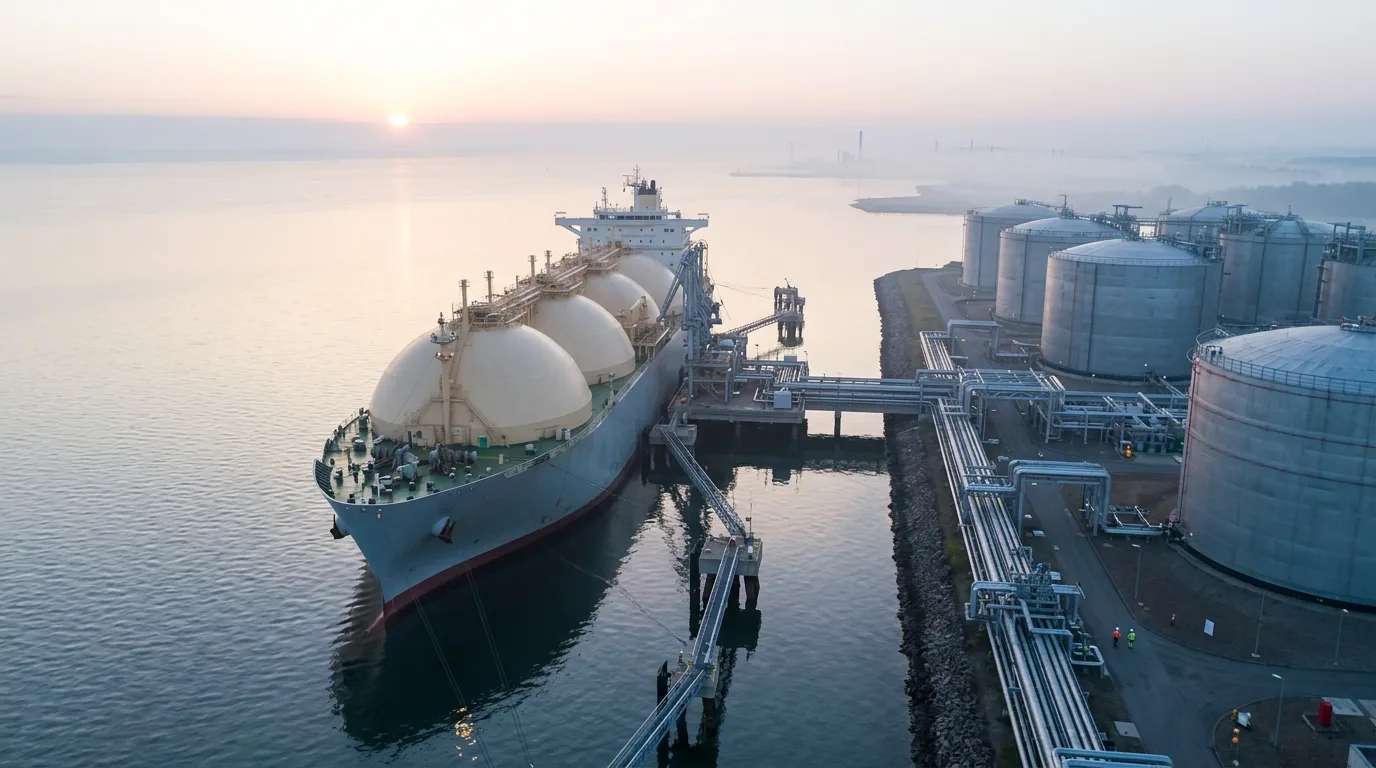
Orlen has terminated one of its two long-term liquefied natural gas supply contracts with QatarEnergy. The move follows a force majeure event that is still in effect and that has stopped the Qatari supplier from honouring its delivery commitments under the agreement. The termination applies only to one of the two parallel supply deals between the companies, leaving the second arrangement in place.
Force majeure clauses in long-term LNG agreements typically excuse a seller from making deliveries while an event beyond its control prevents performance. Rather than simply suspending cargoes for the duration of the event, Orlen has ended the contract altogether. The affected volumes are therefore removed from the company's supply portfolio on a permanent basis, instead of being paused until the force majeure is lifted and shipments resume.
Long-term supply deals of this kind give both sides planning certainty: a seller commits capacity far in advance and a buyer builds its import and downstream supply plans around the contracted cargoes. When non-delivery under such a contract ends in termination, that certainty disappears for the affected volumes on both sides. The ongoing force majeure means the supplier has been unable to deliver as contracted, and Orlen has responded by ending the agreement rather than waiting for the situation to be resolved.
Orlen's second long-term agreement with QatarEnergy is unaffected and remains in force, making it the company's only remaining direct supply link to the Qatari producer. With one of its two Qatari supply streams gone, the surviving contract carries more weight in Orlen's overall LNG procurement. For buyers and sellers of term LNG, the episode is a reminder that a force majeure left unresolved can end in termination rather than a temporary pause in deliveries, a risk inherent in long-term supply deals.
Source: Offshore Technology