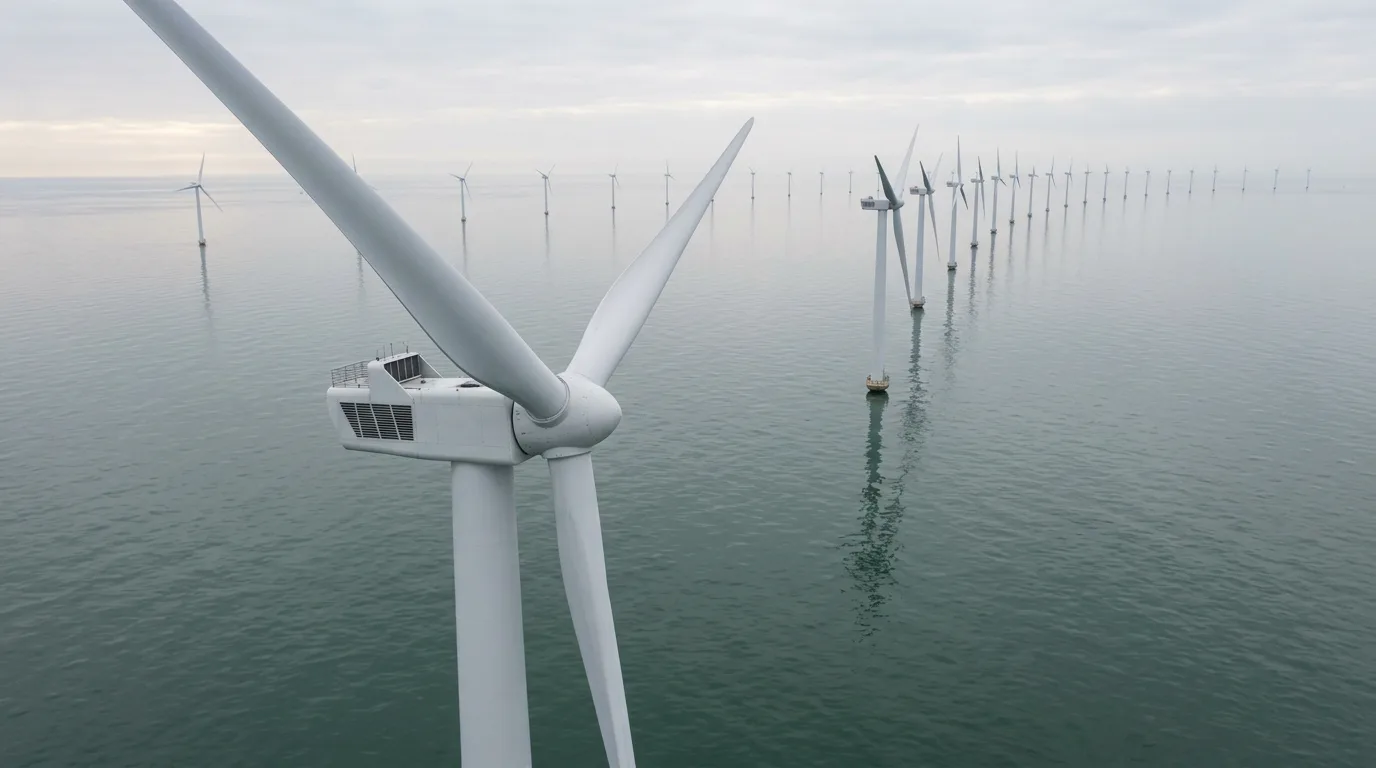
Orsted announced that Revolution Wind, a 704-megawatt offshore wind project in the United States, has reached commercial operation. The asset is held through a 50:50 partnership between Orsted and GIP, giving the two firms equal ownership of the development. The milestone marks the move from construction and commissioning work into service as a generating facility.
The completion carries particular weight given the political pressure surrounding the project. The development was described in the report as one of several U.S. offshore wind projects threatened with cancelation by the Trump administration. Threats of that kind typically create uncertainty around financing, contracting and schedules across a project's supply chain, so its arrival at commercial operation stands out against that backdrop.
Commercial operation is the point at which construction and commissioning risk gives way to operating performance, and it typically marks the start of revenue-bearing generation for the owners. The transition means the 704 megawatts of capacity now stand as installed capacity in service rather than a figure attached to a project under construction. It also moves the asset into a phase where operation and maintenance, rather than project delivery, become the central tasks.
For the U.S. offshore wind sector, the outcome is a concrete example of a project moving past federal-level cancelation threats to reach service. In a market where several projects faced that same threat, the completion of one of them provides a reference point for how such developments can progress despite political opposition. For Orsted and GIP, the joint venture now enters its operating phase, with the partners sharing responsibility for a 704-megawatt facility that has moved from threatened project to running asset.
Source: Rigzone