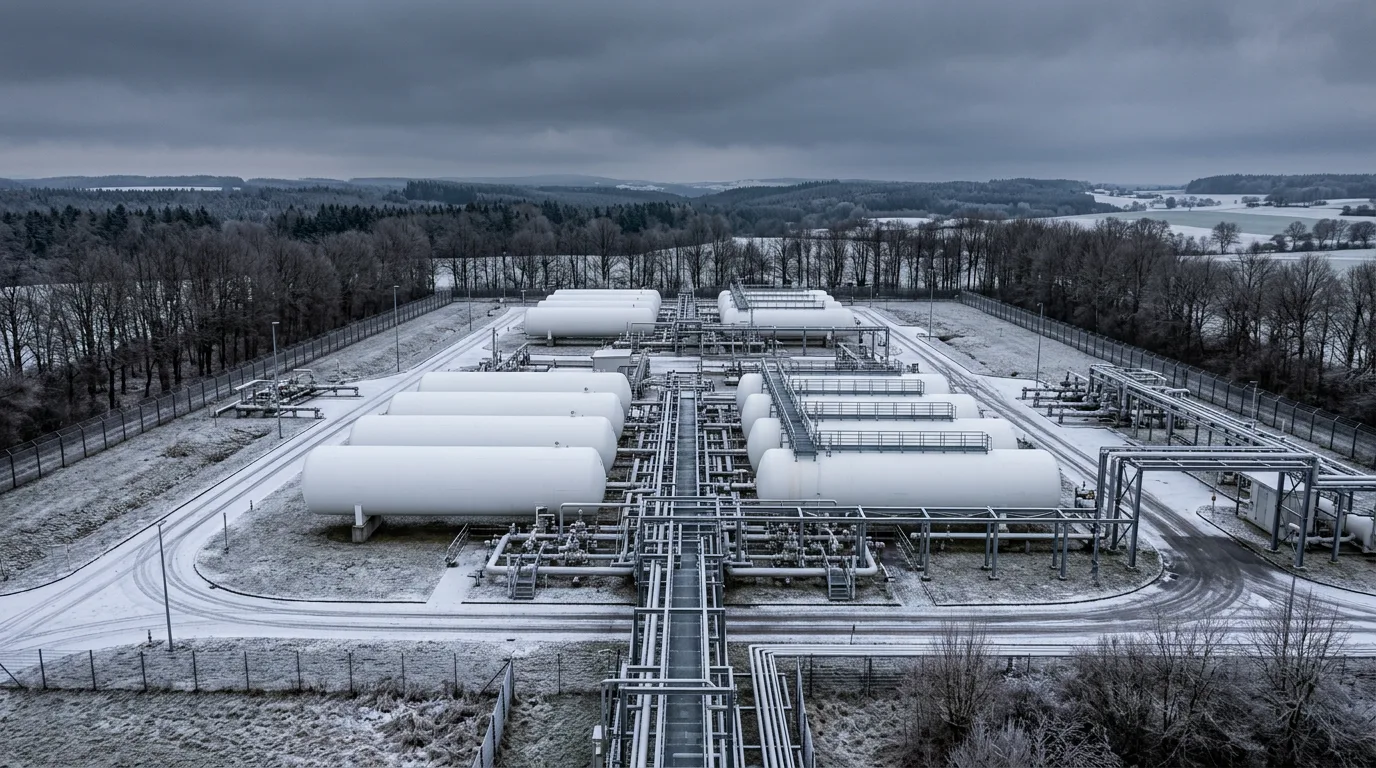
Germany has entered the heating season with its natural gas storage below the level required by European Union rules. The bloc obliges every member state to secure enough gas ahead of winter to fill 80% of storage capacity. Germany has not met that requirement, with storage about 61% full at the start of winter, leaving the EU's largest economy facing what the report calls a difficult heating season.
The shortfall comes amid elevated prices. The European gas benchmark climbed above 100 euros per MWh last week and has remained at that level since. For utilities, network operators and industrial buyers, prices sustained at that level raise the cost of securing the volumes needed to get through the heating season.
Price may not be the most pressing concern, however. The report's assessment is that higher prices could prove the lesser problem, with a supply crunch posing the greater risk. Storage acts as the buffer that absorbs demand swings and supply disruptions over winter, and entering the season roughly 19 percentage points below the mandated fill level leaves less room to absorb either.
For the wider market, the miss stands out because the storage obligation applies to every member state alike. A below-target fill means the system holds a smaller reserve to draw on when cold weather lifts demand or when deliveries fall short. Prices above 100 euros per MWh add to the pressure, raising the cost of every additional volume injected into storage or withdrawn to meet consumption.
For storage and network operators, the season ahead is one of reduced flexibility. With fill levels well short of the EU requirement, the capacity to absorb a cold snap or an interruption in deliveries is smaller, and replenishing storage becomes more expensive while prices hold above 100 euros per MWh.
Source: Oilprice