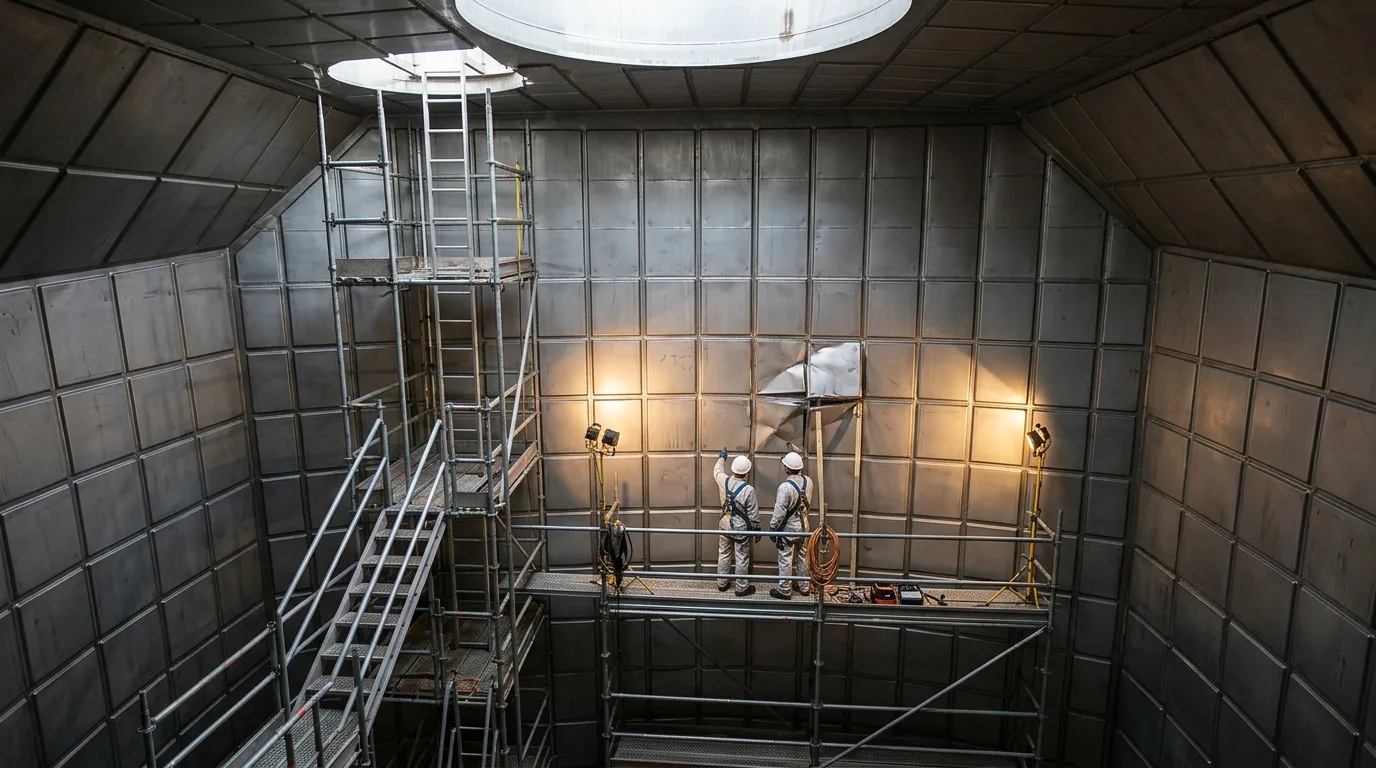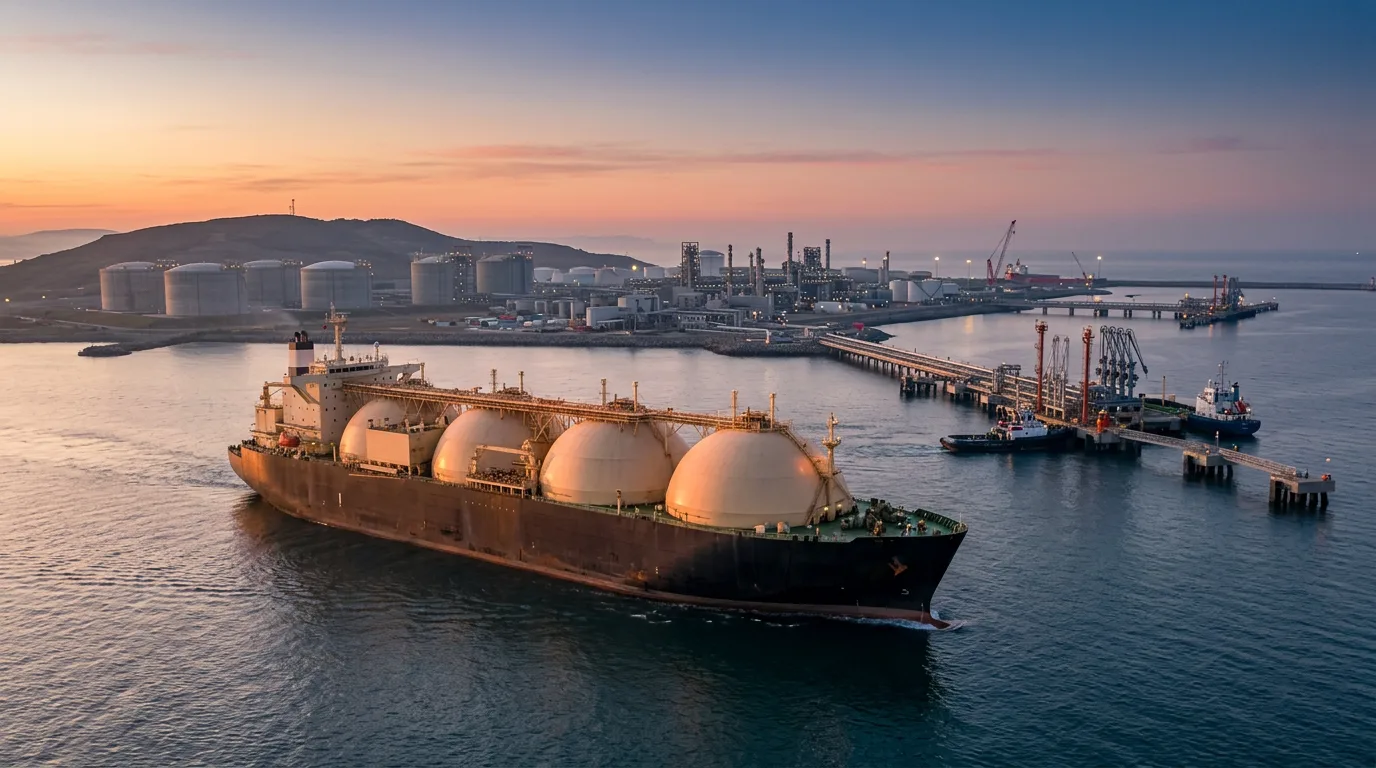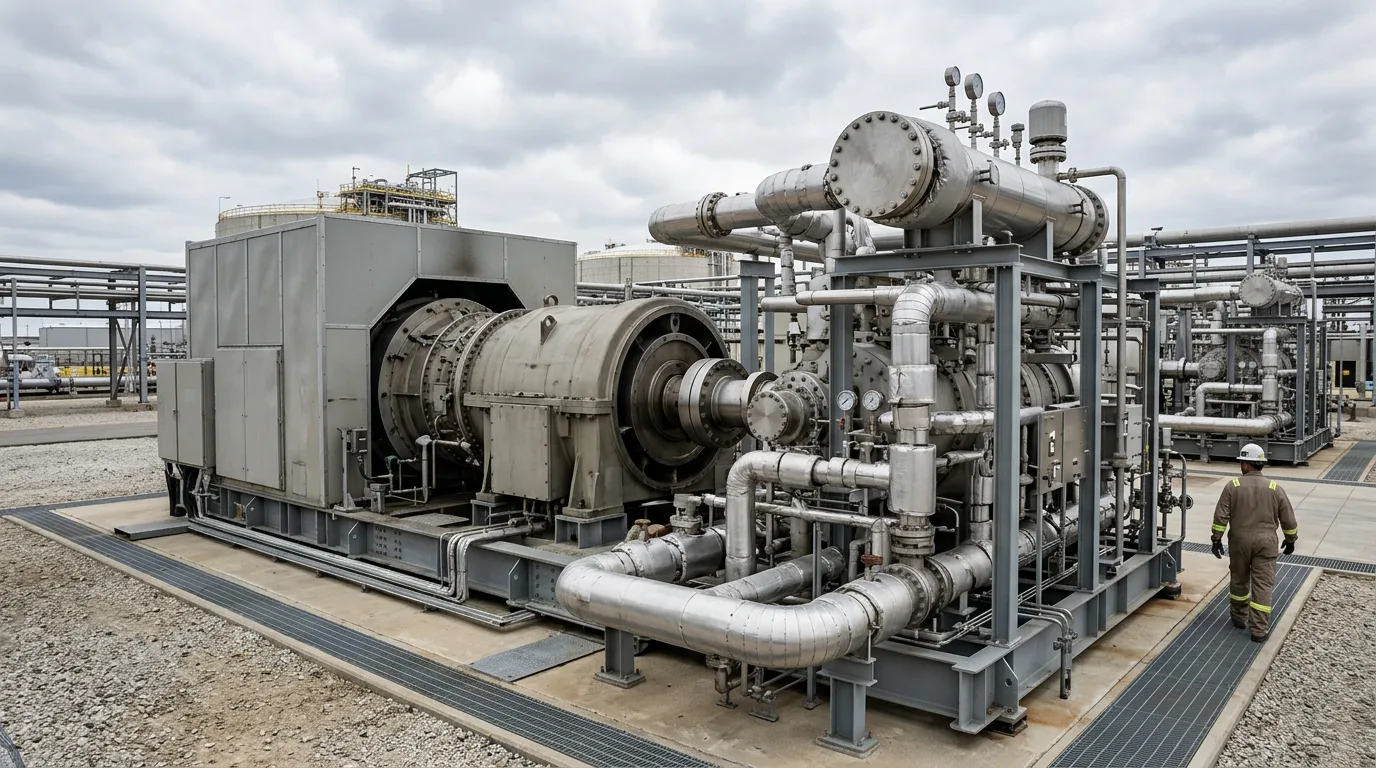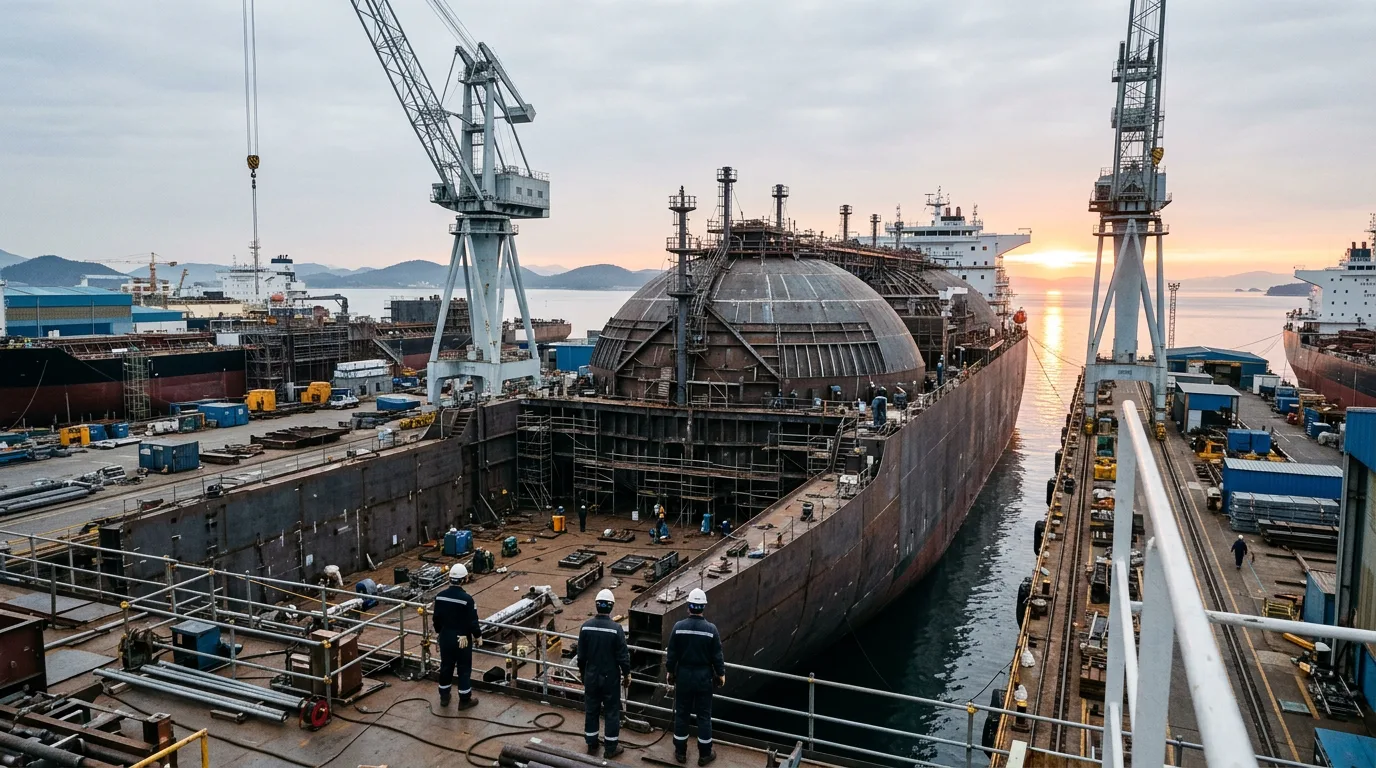
South Korean shipbuilder Hanwha Ocean has started construction of two LNG carriers for GasLog, a shipping company based in Greece. Each of the two vessels is specified at 174,000 cubic meters of cargo capacity. The start of building work moves the project from the orderbook into physical production at the yard, the first tangible step toward delivering the ordered tonnage.
The contract links the South Korean builder with GasLog, a Greek shipping company that now has two carriers under construction at the yard. At 174,000 cubic meters each, the vessels fall into the large carrier class used in long-haul LNG trade. Capacity at this level determines the cargo volume a ship can move on a single voyage, a variable that feeds directly into freight economics and charter planning.
Starting construction is an early step in any shipbuilding program. From this stage, the vessels will progress through hull fabrication, block assembly and outfitting before the testing and commissioning work that precedes delivery. Build schedules for gas carriers generally extend over a considerable period, and the construction start establishes the baseline against which later milestones are measured.
For the LNG shipping market, the project adds two large carriers to the global pool of tonnage under construction. Ships of this class form the logistics link between export terminals and import markets, and fleet availability remains a standing operational concern for the companies trading cargoes. For engineers and operators following the sector, the milestone opens the build phase that ends when the two hulls are ready to enter service.
Source: LNG Prime