Why repurposing a gas line for hydrogen is an integrity problem, not just a valve swap
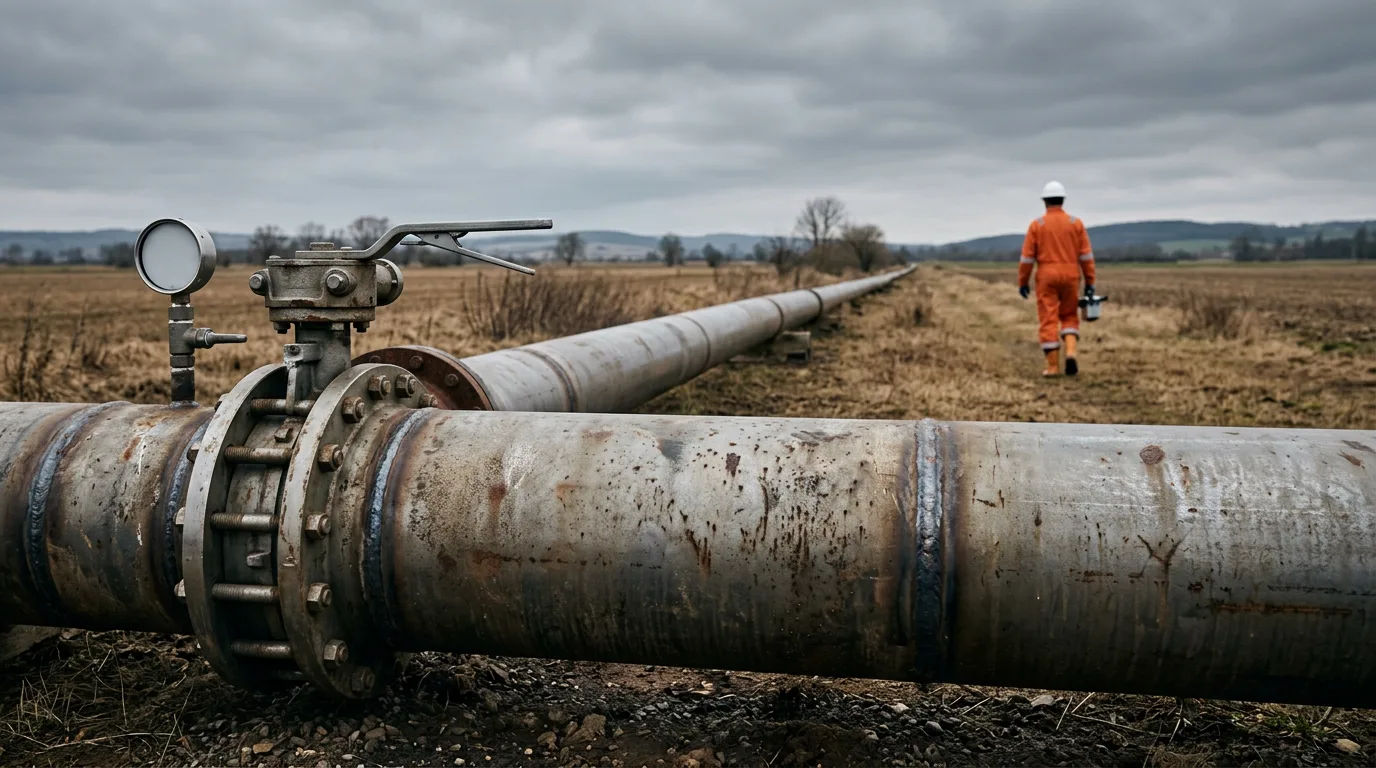
A natural gas transmission line with decades of clean inspection history is not automatically fit for hydrogen. Hydrogen enters the steel, and the properties that governed safe operation on methane (fracture toughness, fatigue crack growth resistance, ductility) shift. Defects that were harmless under natural gas, such as seam weld imperfections, hard heat-affected zones, and shallow cracks left from earlier service, can end up being the features that limit the line.
The cost shows up in three places. Operators who skip material screening risk a conversion that later needs a pressure reduction or even a replacement section. Operators who screen too conservatively strand capacity they could have used. And operators who underestimate pressure cycling discover that a line meeting its static pressure limit still has a short fatigue life.
The German programme to convert parts of the gas grid has made this the central engineering question for project teams. Screen the material, set a justified pressure and cycling envelope, and plan inspection around the defects that matter under hydrogen.
Standards and requirements context
No single document governs every aspect of conversion. In practice, teams combine:
ASME B31.12, Hydrogen Piping and Pipelines. It covers design, construction and operation of hydrogen piping, and offers a prescriptive route and a performance-based route. The performance-based route requires material testing in hydrogen.ASME B31.8, Gas Transmission and Distribution Piping Systems, which most existing lines were designed and operated under.ASME B31.8S, Managing System Integrity of Gas Pipelines, for threat identification, risk assessment and integrity assessment planning.API 5L, Specification for Line Pipe, the baseline for pipe grade, manufacturing route and mechanical property requirements, which is needed to interpret legacy material records.ASTM E1820(fracture toughness measurement) andASTM E647(fatigue crack growth rate measurement), the basic test methods behind hydrogen-specific material qualification.API 1163, In-Line Inspection Systems Qualification, for qualifying the inspection tools used to size the features that drive the assessment.
The DVGW paper Construction, conversion and operation of steel gas pipelines for hydrogen: from material testing to approval describes the German route from material testing to regulatory approval. The ENR coverage of the proposed German-Dutch pipeline notes that European and international guidance permits hydrogen in converted lines, but expects updated safety rules, pressure limits, material testing, valve and seal replacement, and phased certification before commissioning. Confirm the current national technical rules and the competent authority's expectations at the start of the project. They decide which test evidence you have to generate, and it is far cheaper to learn that in month one than in month eighteen.
Technical body
How hydrogen degrades line pipe steel
The JRC review and the Hydrogen Safety article on integrity and safety of repurposed pipelines agree on the main effect: hydrogen embrittlement reduces ductility, fracture toughness and fatigue crack growth resistance. For repurposing, the practical consequences are:
- Fatigue crack growth accelerates under pressure cycling. The MDPI review lists pressure cycling and weld integrity as factors that must be considered in any repurposing assessment. A line that saw modest cycling on natural gas may see very different duty on a hydrogen network that balances variable production and storage.
- Fracture toughness drops in the presence of hydrogen. A Charpy toughness number measured in air does not tell you how a crack behaves in hydrogen gas. That gap is why the Fraunhofer fracture-mechanics work on converting steel gas pipelines (Bruchmechanische Betrachtungen bei der Umstellung von Erdgasleitungen aus Stahl für den Transport von Wasserstoff) treats fracture-mechanics assessment, not simple strength checks, as the basis for conversion.
- Welds and their heat-affected zones are the first suspects. Harder microstructures and residual stress concentrate hydrogen effects. The MDPI review calls for rigorous assessment of the pipeline's welds.
Prevention comes down to limiting hydrogen ingress into the steel lattice. For an existing line you cannot change the steel, so the levers are the operating envelope (pressure, cycling, gas quality) and the defect population (what you find and repair before conversion).
Material screening: what to test and where
A screening programme that supports a conversion decision has to be built around the line's actual material, not the nominal specification. A workable sequence:
- Reconstruct the material record. Collect pipe grade, manufacturer, manufacturing route (seamless, longitudinal seam, spiral), year of installation, wall thickness, coating, and weld procedures. Gaps in the record mean more testing, not assumptions.
- Group the line into material populations. Different vintages, mills, and seam types should be kept as separate populations, each with its own sampling plan.
- Harvest representative samples. Take samples from cut-outs or replaced sections. Include base metal, seam weld and girth weld heat-affected zones.
- Test in hydrogen, not in air. Fracture toughness and fatigue crack growth tests, adapted from the methodologies of
ASTM E1820andASTM E647but run in hydrogen gas at pressures that represent the intended service, generate the hydrogen-specific material properties you need. The DVGW paper's emphasis on "from material testing to approval" reflects that these data feed straight into the approval case. - Feed the results into the fracture-mechanics assessment. The output is a permissible flaw size for a given pressure and cycling regime. That becomes the acceptance basis for inspection findings.
Pressure derating and cycling limits
Derating is not one factor applied to maximum allowable operating pressure. It has three components:
- Design-factor basis. Under the performance-based route in
ASME B31.12, hydrogen-tested material properties support a justified design basis rather than a blanket reduction. The prescriptive route is simpler, but it is more conservative. - Maximum operating pressure. The fracture-mechanics assessment sets the highest pressure at which the largest credible remaining flaw is still tolerable.
- Pressure cycle envelope. Often the real constraint. Fatigue life depends on pressure range and cycle count, so operating strategy (buffering, storage use, compressor control, ramp rates) becomes part of the integrity case.
| Decision variable | Conservative option | Performance-based option | What it demands |
|---|---|---|---|
| Design basis | Prescriptive route with a larger reduction from the natural gas basis | Hydrogen-tested properties justify a smaller reduction | Test programme in hydrogen, traceable material records |
| Allowable flaws | Repair or replace a broader set of features | Fracture-mechanics-based flaw acceptance | Qualified ILI sizing, validated assessment method |
| Cycling | Restrict pressure range operationally | Allow wider range if fatigue life supports it | Realistic cycle forecast from the network operator |
| Conversion scope | Replace suspect populations | Convert as-is where tests support it | Material population mapping |
Inspection planning for converted lines
Plan inspection around the failure mode hydrogen makes worse, which is crack growth from existing flaws.
- Baseline inspection before conversion. Run in-line inspection with tools capable of detecting and sizing crack-like features and weld anomalies, plus geometry and metal-loss tools. Qualify tool performance against
API 1163, and confirm sizing accuracy against the flaw sizes that matter in the fracture assessment. A tool that detects a feature but cannot size it adequately forces conservative repair decisions. - Verification digs. Excavate and examine a sample of features, especially at seam and girth welds, to validate ILI calls before they underpin a conversion case.
- Integrity management under
ASME B31.8Sprinciples. Update threat identification to add hydrogen-related fatigue and embrittlement. Reassessment intervals should come from the calculated crack growth under the actual cycling regime, not from the intervals used for natural gas. - Monitoring after startup. Track pressure cycling against the design assumption. The integrity case only holds if the real duty matches the assumed duty.
Ancillary equipment: where leaks actually happen
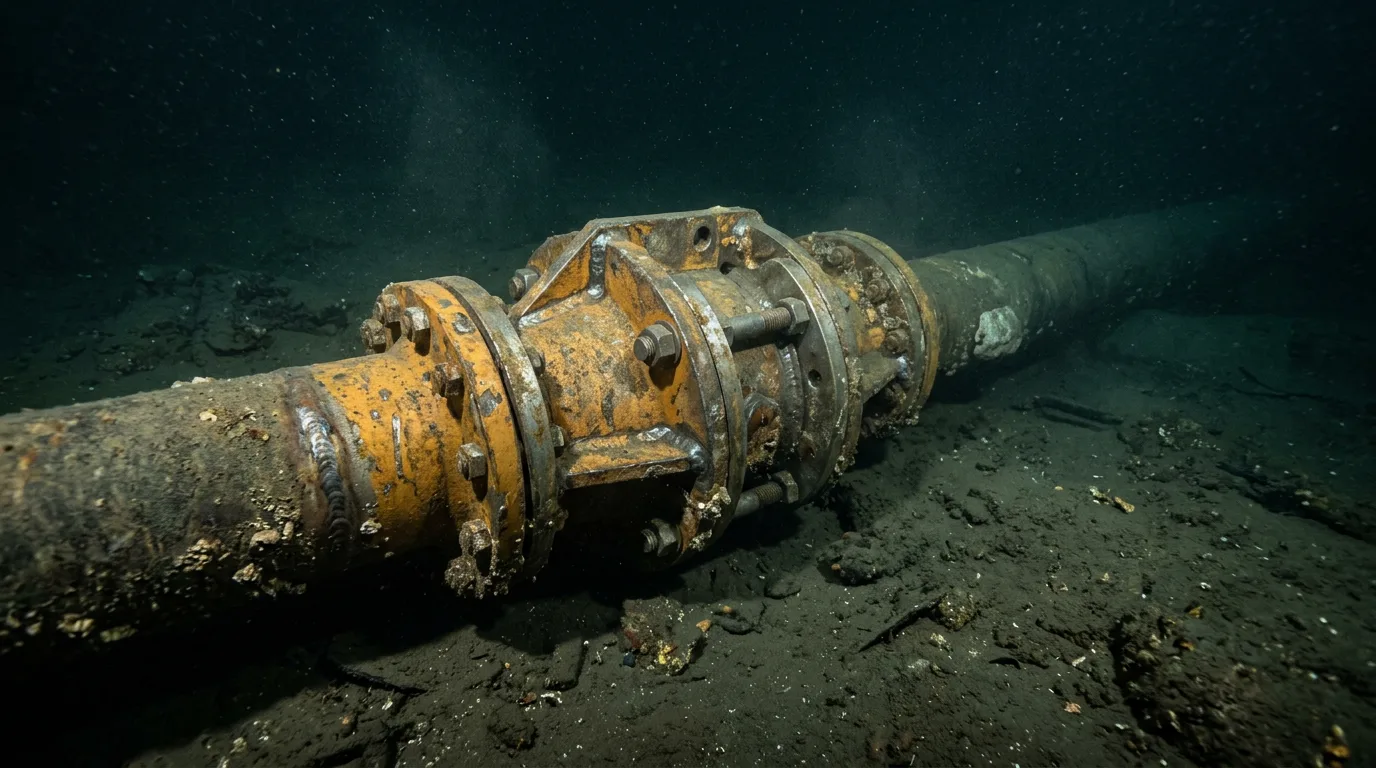
The ENR and AVEVA articles highlight that valves, seals and compressor-station components are a practical limit. Hydrogen has high diffusivity and low molecular weight, so it finds its way through seals designed for natural gas, and some valves designed for natural gas may not seal adequately against hydrogen. Review every valve type, elastomer, gasket, instrument connection and compressor component for hydrogen compatibility. Replace whatever lacks qualification evidence. Leakage risk concentrates where different components meet.
Safety during inspection and cut-out work
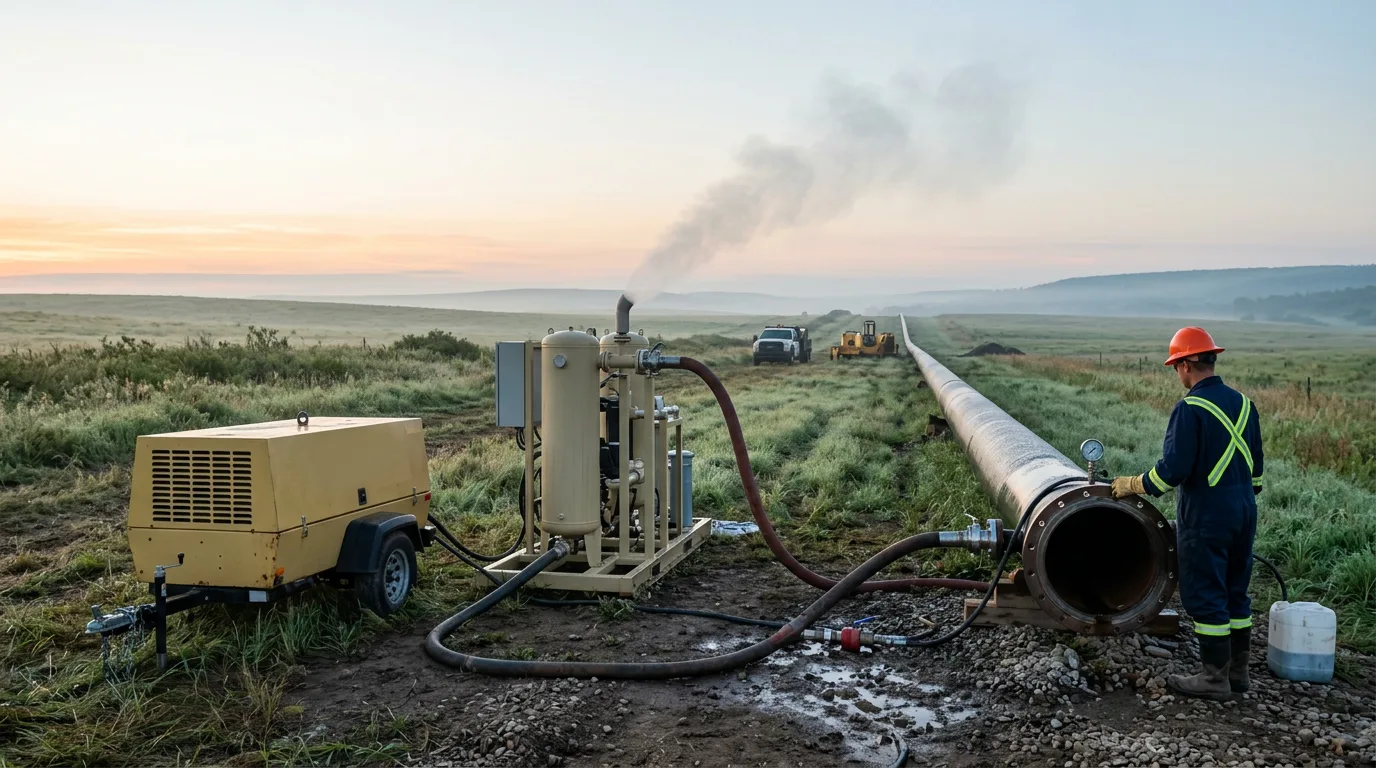
Any work that opens, depressurises or inspects hydrocarbon-containing sections needs a controlled sequence:
- Isolate the section with positive isolation, not a single valve.
- Depressurise through a controlled, engineered vent route to a safe location.
- Verify zero energy at the work location with calibrated gauges, and verify that isolation holds.
- Apply lockout/tagout to all isolation points and energy sources.
- Classify the hazardous area and use certified equipment and ignition-source control around excavations, vents and cut points.
- Use gas detection suitable for the gas present, with attention to hydrogen's wide flammable range and the fact that its flame is hard to see.
- Purge according to the approved procedure. Hydrogen and air mixtures in a section are a hazard in both directions during conversion.
Illustrative scenario: two vintages, one conversion decision
This scenario is illustrative and not drawn from a named project.
An operator is assessing a transmission line made up of two populations. The older section has longitudinal seam welds and incomplete records. The newer section has well-documented modern line pipe.
The operator treats them as separate material populations from the start. For the newer section, the records support a smaller test programme, and the Mannesmann-type qualification approach for modern pipe applies. For the older section, the operator cuts out samples, including seam weld heat-affected zones, and tests fracture toughness and fatigue crack growth in hydrogen.
The ILI baseline shows crack-like features at some seam welds in the older section. The fracture assessment, using hydrogen-tested properties and the operator's forecast cycling regime, shows the older section tolerates only smaller flaws than the newer section does. Two options follow:
- Option 1: operate the whole line with a narrower pressure range, accepting lower flexibility for the network.
- Option 2: repair or replace the worst older-section features and convert the section with a controlled cycling envelope.
The decision turns on how much cycling the network operator needs from this line. If the forecast duty is steady, Option 1 works. If the line is needed to balance variable supply, Option 2 becomes necessary. The example shows why the cycling forecast has to be agreed before the derating decision, not after it.
Decision checklist
- Material records reconstructed, with gaps identified and material populations defined.
- Samples harvested from base metal, seam welds and girth weld heat-affected zones for each population.
- Fracture toughness and fatigue crack growth tested in hydrogen at representative pressure.
- Design route selected (prescriptive or performance-based under
ASME B31.12) and justified. - Pressure cycling forecast agreed with the network operator and used in the fatigue assessment.
- ILI tools qualified for crack-like and weld features, with sizing accuracy matched to assessment needs.
- Verification digs completed and ILI calls validated.
- Flaw acceptance criteria derived from hydrogen-specific fracture mechanics.
- Valves, seals, elastomers, instruments and compressor components reviewed for hydrogen compatibility and replaced where evidence is missing.
- Integrity management plan updated under
ASME B31.8Sprinciples with hydrogen-specific threats and reassessment intervals. - Isolation, depressurisation, zero-energy verification, LOTO, gas detection, hazardous-area control and venting procedures approved for all intrusive work.
- Regulatory and certification path confirmed with the competent authority, including phased commissioning.
Conclusion and next steps
Converting a natural gas pipeline to hydrogen is feasible, but only for the segments where the material evidence supports it. The sequence matters: reconstruct the material record, test in hydrogen, derive flaw acceptance from fracture mechanics, and tie the pressure and cycling envelope to the operator's real duty. Then plan inspection around crack growth, and replace any ancillary equipment that lacks hydrogen qualification.
As a first step, build the material population map and the cycling forecast for each candidate line. These two inputs set the test programme, the derating route and the inspection plan. They also show early which segments are likely to convert as-is and which will need repair or replacement.