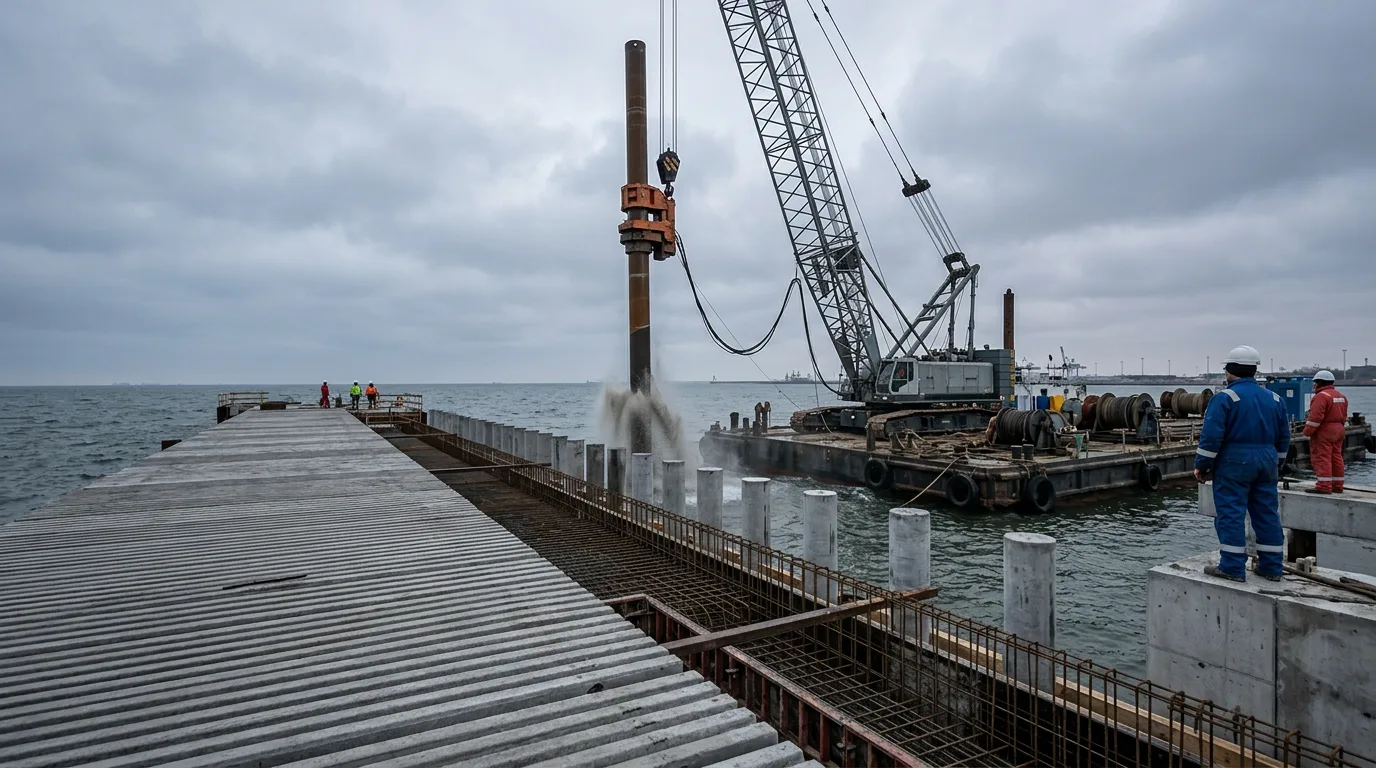
Gaz-System, the state-owned company that operates Poland's LNG terminal infrastructure, is pressing ahead with the construction of a jetty at the centre of its LNG import project in Gdansk. The berth is being built to receive the project's first floating storage and regasification unit, the vessel that will perform the terminal's basic job of holding imported LNG and returning it to gaseous form. With the jetty moving forward, the marine portion of the scheme has shifted into active construction.
An FSRU packs LNG storage and regasification into one floating unit, which is what allows it to substitute for a large share of the onshore plant a land-based import terminal would otherwise need. At Gdansk, the jetty will form the physical link between that vessel and the shore, giving the FSRU a berth and a connection point for transfers between ship and terminal. Completing the berth is thus a precondition for the floating unit to begin its working life at the site.
As the state-owned terminal operator, Gaz-System is the entity developing the Gdansk facility, which is conceived as an import project for LNG delivered by sea. The description of the vessel as the first FSRU for the site indicates that the terminal's initial import capability will rest on a floating unit moored at the new jetty. The current works campaign covers the marine and structural scope that has to be in place before any vessel can be received alongside.
For engineers and operators in the LNG chain, the Gdansk arrangement is a clear example of the floating-regasification model, in which a purpose-built berth and an FSRU together deliver storage, regasification and gas send-out. Progress on the jetty is a practical indicator of how quickly the project can move from marine construction toward the arrival of its first floating unit and the start of operations. Until the berth is ready, the FSRU has nowhere to moor and the facility cannot function, which makes the current works the gating item for the project's next phase.
Source: LNG Prime