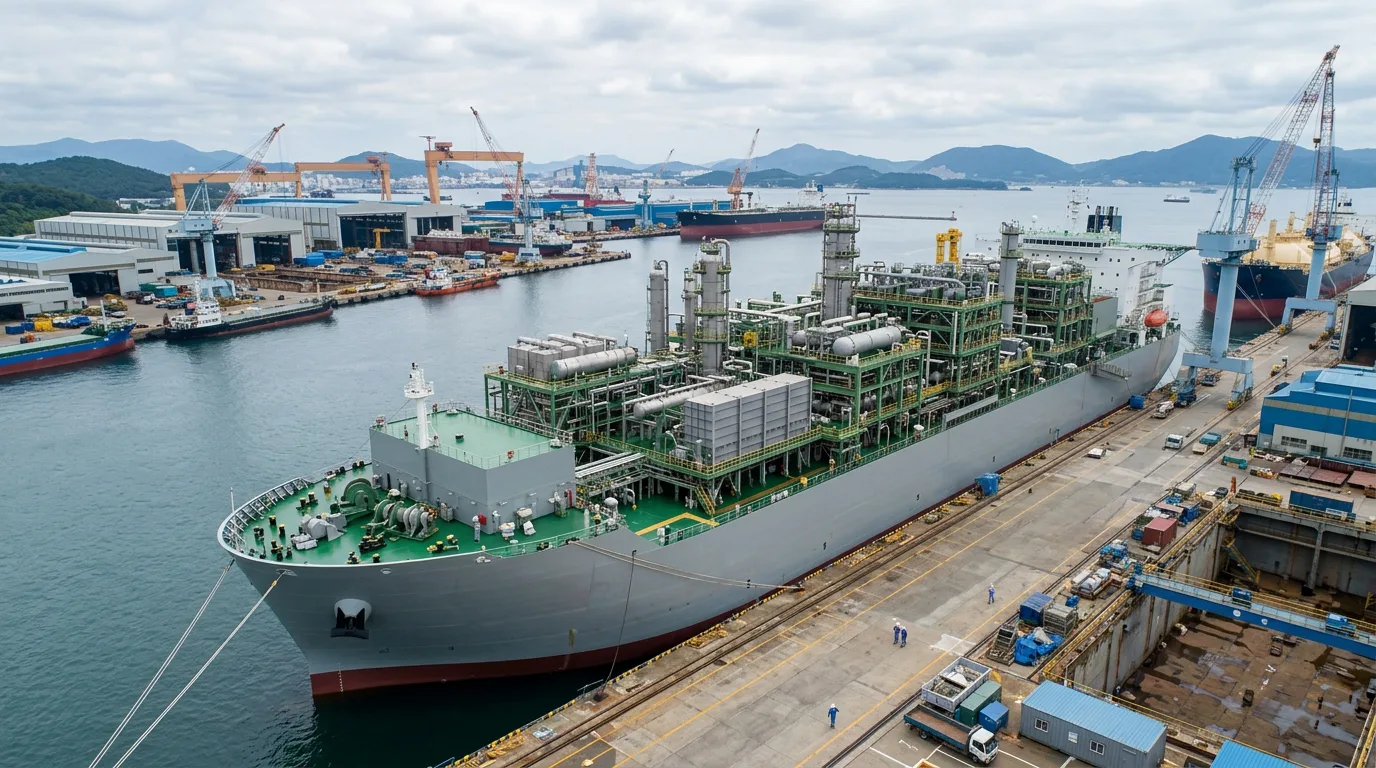
Petronas has formally named PFLNG TIGA, the third floating liquefied natural gas facility in its program, during a ceremony at the Samsung Heavy Industries shipyard in South Korea. The unit is described as the world's first nearshore FLNG facility, a label that sets it apart from the floating liquefaction vessels conventionally deployed at remote offshore fields. The naming marks a visible step in the unit's progress at the yard.
The nearshore concept is the defining feature of the project. Floating liquefaction units have generally been designed to operate over offshore gas fields far from land, producing, storing and offloading liquefied gas at sea. A nearshore facility, by contrast, is positioned close to the coast, an arrangement intended to serve near-shore gas resources without the need for a full onshore liquefaction plant. For Petronas, PFLNG TIGA extends a floating liquefaction effort that already spans two earlier units, making this the third vessel in the series.
The facility is under construction at the Samsung Heavy Industries yard, where the naming ceremony serves as a customary milestone in the shipbuilding sequence, traditionally marking a vessel's transition from construction toward completion and handover. The event also highlights the collaboration between the Malaysian operator and its Korean builder as the unit advances toward its next phase.
For the wider industry, the naming underlines how floating liquefaction keeps expanding as a route to monetizing gas that would not justify fixed onshore infrastructure. A third FLNG unit adds to Petronas's floating liquefaction capacity and, if the nearshore configuration performs as intended, could give operators a template for developing near-coastal gas fields with a movable, reusable asset. The nearshore setting will bring its own engineering considerations, from mooring and offloading arrangements to the interface with shore-based systems, and the unit's entry into service will show how the concept holds up in practice.
Source: Offshore Engineer