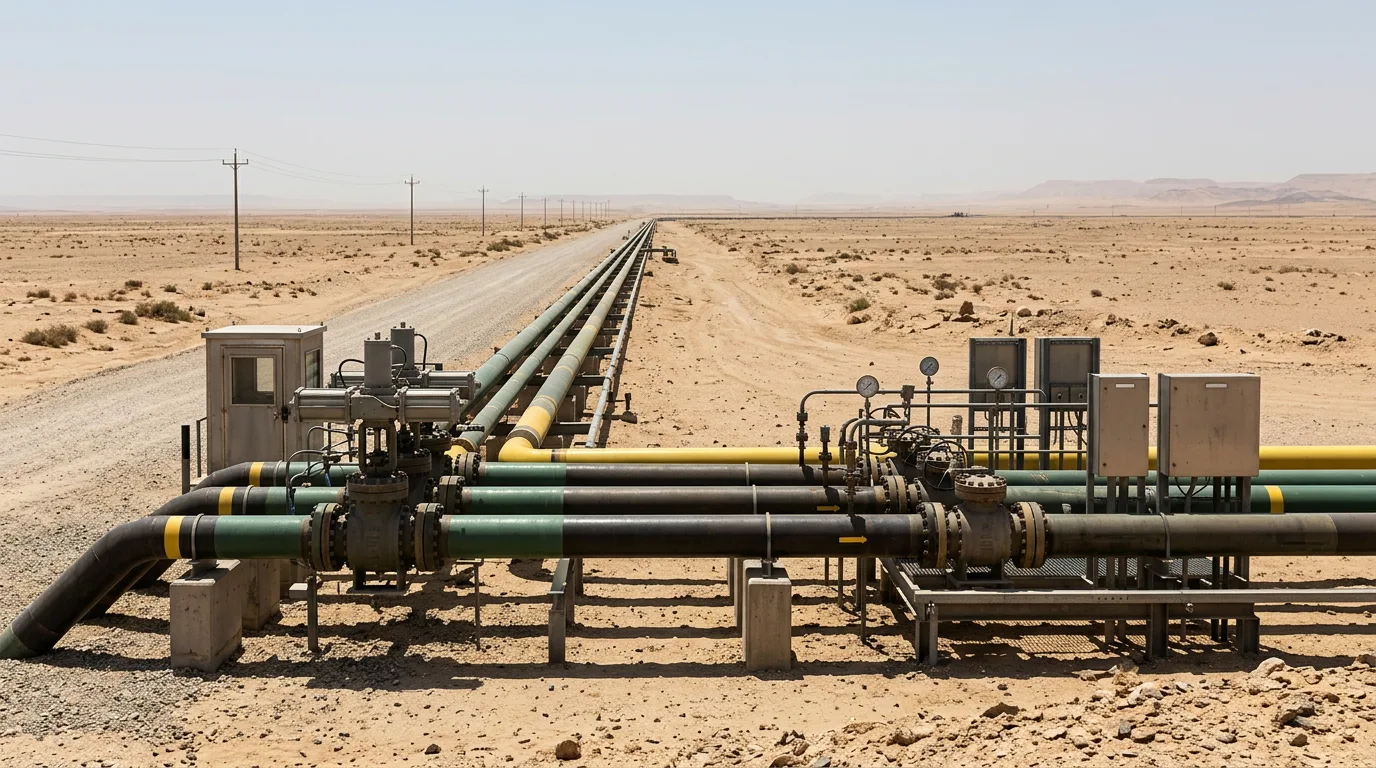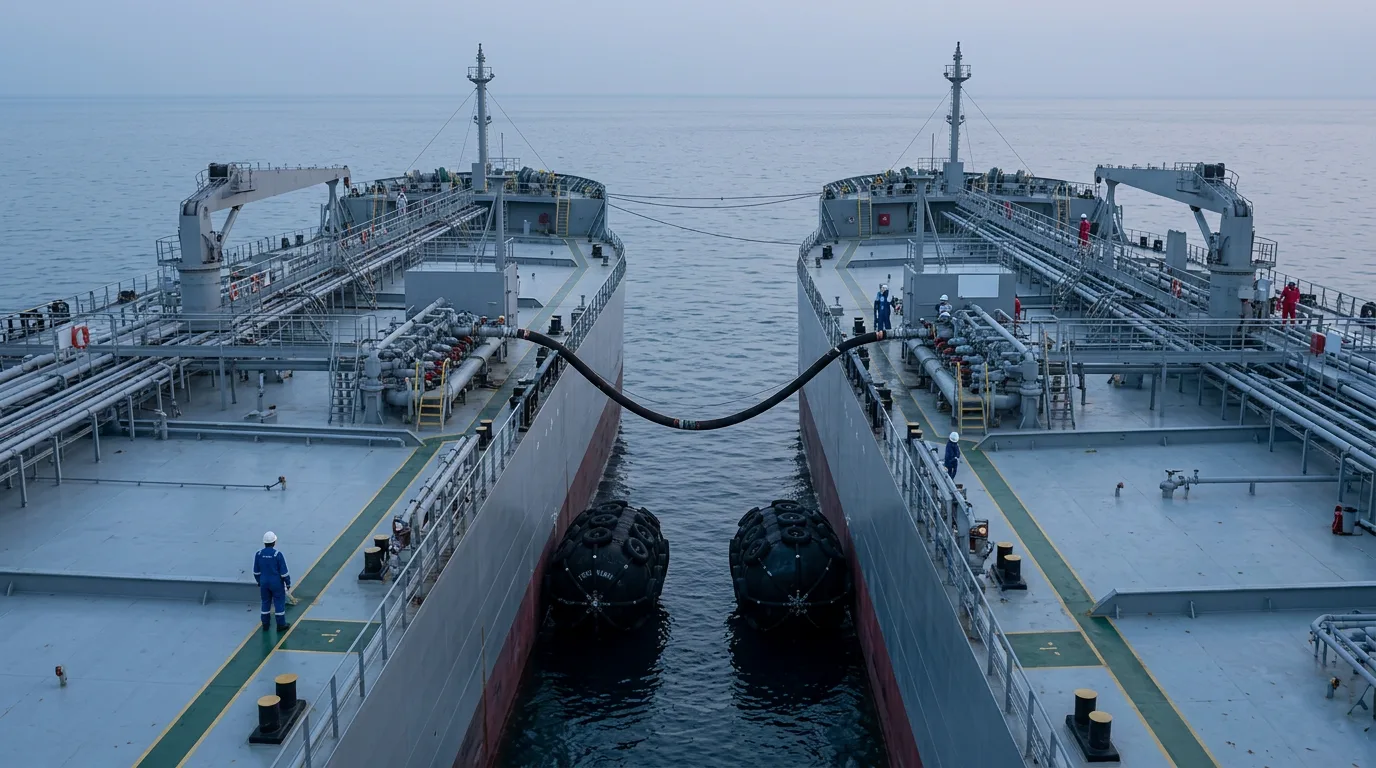
Ship-to-ship (STS) crude transfer puts two moving vessels, flexible hoses and a large flammable inventory into one small, weather-exposed space. There is no shore infrastructure to absorb mistakes. A parted mooring line, an overloaded fender or a leaking hose connection can become a pollution event and an ignition event within minutes. The fallout includes injury, regulatory action, cargo loss, vessel detention and lost charterer confidence. Most of these events trace back to planning and control failures rather than equipment alone: nobody clearly in charge, hoses and fenders not checked, weak communications, and an emergency plan that nobody has rehearsed.
This article sets out how HSE and marine operations teams can structure hazard identification, fender and hose management, personnel transfer and emergency response for crude STS work, in line with recognised industry guidance.
Standards and Requirements Context
Most STS operators and port authorities work to the following reference documents:
- OCIMF Ship to Ship Transfer Guide for Petroleum, Chemicals and Liquefied Gases (2nd Edition). This is the main industry guide for STS planning, equipment, mooring, transfer and emergency preparedness. Port rules, such as the Port of Gothenburg STS manual, explicitly adopt it.
- ISGOTT (International Safety Guide for Oil Tankers and Terminals), 5th Edition. It covers the general tanker practices that still apply during STS: static electricity, ignition sources, gas hazards, cargo handling and emergency procedures.
- MARPOL Annex I. Its chapter on prevention of pollution during oil transfer between oil tankers at sea sets out the regulatory frame for STS, including the expectation of a ship-specific plan. Tankers must also carry a shipboard oil pollution emergency plan.
- Local port and coastal-state requirements. These usually add notification, approval of transfer areas and contingency plan obligations on top of the international instruments.
Treat the OCIMF guide as the operating baseline, then check your port's STS manual for anything stricter.
Control of the Operation
Who Is in Charge
The OCIMF guide describes the Person in Overall Advisory Control (POAC), also called the STS Superintendent in much of the industry. The POAC advises both masters, who keep responsibility for their own ships. The role only works if the person is competent. Britannia P&I's STS guidance lists the expected attributes, including:
- understanding of the geographic transfer area and its surroundings;
- knowledge of spill clean-up techniques, including familiarity with the equipment and resources in the STS contingency plan;
- thorough knowledge of the STS Plan.
HSE teams should audit these attributes when appointing a POAC. Don't assume them from a job title.
Plan to Abort
Britannia's guidance is built around preparing to abort. Before the first line goes across, both ships should agree the conditions that stop the operation, how hoses will be cleared and disconnected, and how the ships will separate. An abort plan that lives only in the master's head will fall apart under pressure.
Hazard Identification
Run a joint risk assessment before each operation, using the actual ships, location and forecast. The table summarises the hazards that recur in crude STS work.
| Hazard | How it arises | Primary controls |
|---|---|---|
| Hose or coupling leak | Chafe, flange joint failure, over-pressure, poor support | Pre-use inspection, tested and certified hoses, hose saddles and chafe protection, drip trays, deck watch |
| Fender failure or contact damage | Overloading, wrong type or size, relative motion, lost fenders | Fender sizing for the ship pair, secured and inspected fenders, spares on hand, mooring watch |
| Mooring failure | Changing freeboard, trim and list as cargo moves; swell, wind or current | Monitoring of lines, adjustment as draft changes, defined weather limits |
| Vapour accumulation | Venting during loading, low wind, deck-level eddies | Gas monitoring, controlled venting, control of ignition sources |
| Ignition | Hot work, electrical equipment, static, mobile phones, galley and accommodation openings | Permit control, equipment restrictions, bonding practices consistent with ISGOTT, closed openings |
| Overfill | Tank loading errors, poor communication between ships | Agreed loading rates and tank sequences, ullage monitoring, stop signals |
| Personnel injury | Transfer between ships, slips and trips on wet decks, line handling | Controlled personnel transfer procedure, PPE, line-handling briefings |
Skuld flags a point people often underrate. A hydrocarbon spill raises the risk of fire or explosion, and the airflow around STS decks tends to form eddies that stop gas from clearing. Vapour can pool in spots a simple wind-direction check would never predict. Put portable gas detection where people actually work, not just where the plan expects the vapour to drift.
Fender and Hose Management
Fenders
Fenders absorb the relative motion between hulls. Their selection and condition decide whether contact loads are controlled or pushed into the hulls and mooring system. Good practice, consistent with the OCIMF guide, includes:
- Select fenders for the specific ship pair, taking account of size, displacement and freeboard range through the operation. The UK P&I Club makes the same point for dry bulk: changing displacement, freeboard, trim and list alter lead angles and vessel interaction.
- Inspect fenders before use for damage, loss of pressure where applicable, and the condition of chains, tyres and attachment points.
- Secure fenders so they can't be lost or knocked loose, and keep spares ready for deployment.
- Assign a watch to monitor fender position and contact throughout, with authority to call a stop.
Hoses
Hoses are the main route to a large spill. Treat them as safety-critical equipment:
- Verify certification and history. Confirm that each hose string has current test records and is rated for crude service and the expected transfer pressure.
- Inspect before use. Check cover damage, kinks, distortion, flange face condition, gasket condition and bolt integrity. Reject any hose of doubtful condition. Don't lean on operating margin to get you through.
- Support the string. Arrange hoses so they stay within bend limits, don't chafe on the ship's side or deck edges, and don't take snatch loads when the ships move.
- Plan for relative motion. Allow enough hose length and support for the expected movement as freeboards change.
- Contain leaks. Fit drip trays at the manifolds, block scuppers, and keep absorbents and spill kit at hand.
- Pressure test and leak check. Leak-check connections before ramping up to full rate, with a manifold watch on each ship.
- Drain and clear before disconnection. Follow the agreed procedure for blowing or draining hoses, and keep drip trays in place until the connection is broken and blanked.
Opening or breaking a hydrocarbon connection is a controlled hydrocarbon-containment activity. Isolate the line at the manifold valves, depressurise it to a safe location, and confirm no pressure remains before you release any bolts. Lock or tag the valves under the ship's isolation procedure, check the atmosphere with gas detection, and keep ignition sources controlled the whole time. Route drained liquid and vented vapour to safe containment, never to open deck.
Personnel Transfer
Moving people between vessels is a separate hazard. It needs its own risk assessment and approval. Typical requirements include:
- Agree the method between both masters beforehand, and use only equipment designated and maintained for the purpose.
- Restrict transfers to periods when ship motion and weather sit within the limits in the STS Plan.
- Wear PPE, including lifejackets, and make sure the receiving ship knows who is coming across and why.
- Don't combine transfers with critical cargo or mooring work when the same people are needed elsewhere.
- Give the person in control of the transfer authority to stop it.
If the operation doesn't strictly require someone to cross, don't send them.
Emergency Response
Plan and Resources
The STS Plan should link directly to each ship's shipboard oil pollution emergency plan and to the area contingency arrangements. The POAC's familiarity with spill clean-up techniques and with the equipment listed in the contingency plan matters here. The first few minutes are decided by what is on deck and who knows how to use it.
What to Rehearse
- Stop transfer: agreed signals, backup communications, and the order of valve closure on both ships.
- Spill on deck or at sea: alarm, containment, notification of the coastal authority and the response organisation, and use of onboard equipment.
- Fire or gas release: isolating ignition sources, firefighting response, and the decision to separate.
- Mooring or fender failure: how and when to disconnect hoses and unmoor, and who makes that call.
- Injury or man overboard: recovery and medical evacuation arrangements.
Run drills that involve both ships. A plan that reads well on paper but has never been exercised across two crews usually breaks down at the communication step.
Illustrative Scenario
The following scenario is illustrative and does not describe a real event.
During a crude transfer in a designated area, the deck watch on the discharging ship sees seepage at a hose flange as the string settles with the changing freeboard. The sequence below follows good practice:
- The watch reports to the cargo control room and the POAC on the agreed channel, and the stop signal is given.
- Both ships stop the transfer and close manifold valves in the agreed order.
- The drip tray is checked, scuppers are confirmed blocked, and absorbents are deployed on deck.
- Ignition sources are controlled, and portable gas detectors are positioned downwind and at the work area, recognising that deck-level eddies may hold vapour.
- The line is isolated, depressurised and verified free of pressure before anyone works on the flange.
- The hose is replaced, not repaired in place, and the new connection is leak-checked at a low rate before transfer resumes.
- The event is recorded, with a review of hose support and the expected relative movement for the rest of the operation.
The result is a small, contained release rather than a spill reaching the water. Stop authority, containment and ignition control were all in place before anyone needed them.
Pre-Transfer and Go/No-Go Checklist
- The POAC is appointed, competent for the transfer area, and familiar with the STS Plan and contingency resources.
- Both masters have agreed the STS Plan, communication methods, stop signals and abort criteria.
- The risk assessment reflects the actual ship pair, location and current forecast.
- Fenders are selected for the ship pair, inspected, secured and backed by spares.
- Hoses have current certification, have been inspected, and are supported against chafe and snatch.
- Drip trays are in place, scuppers are blocked, and spill equipment is staged at both manifolds.
- Gas detection is available and positioned for deck-level vapour accumulation.
- Ignition source controls and permit arrangements are in force on both ships.
- Mooring watch and fender watch are assigned with authority to stop.
- Personnel transfers are justified, approved and within the weather limits of the plan.
- The shipboard oil pollution emergency plan and the STS contingency plan are accessible and understood, and emergency roles are briefed.
- A disconnection and separation procedure is agreed, including hose draining and blanking.
If any item can't be confirmed, delay the operation until it can.
Conclusion and Next Steps
In crude STS work, spill and ignition risk comes down to three things: clear command, disciplined equipment handling and emergency response that has actually been rehearsed. For an HSE or marine operations team, the practical next steps are:
- Compare your current STS procedures with the OCIMF guide and ISGOTT, and with any port STS manual that applies.
- Audit POAC competence against the attributes listed above, including knowledge of the contingency plan and spill clean-up resources.
- Review hose and fender inspection records for gaps, and set rejection criteria that don't depend on operating margin.
- Run a joint drill with both ship crews that tests stop-transfer, spill response and separation.
- Make the abort plan a mandatory element of every pre-transfer meeting.