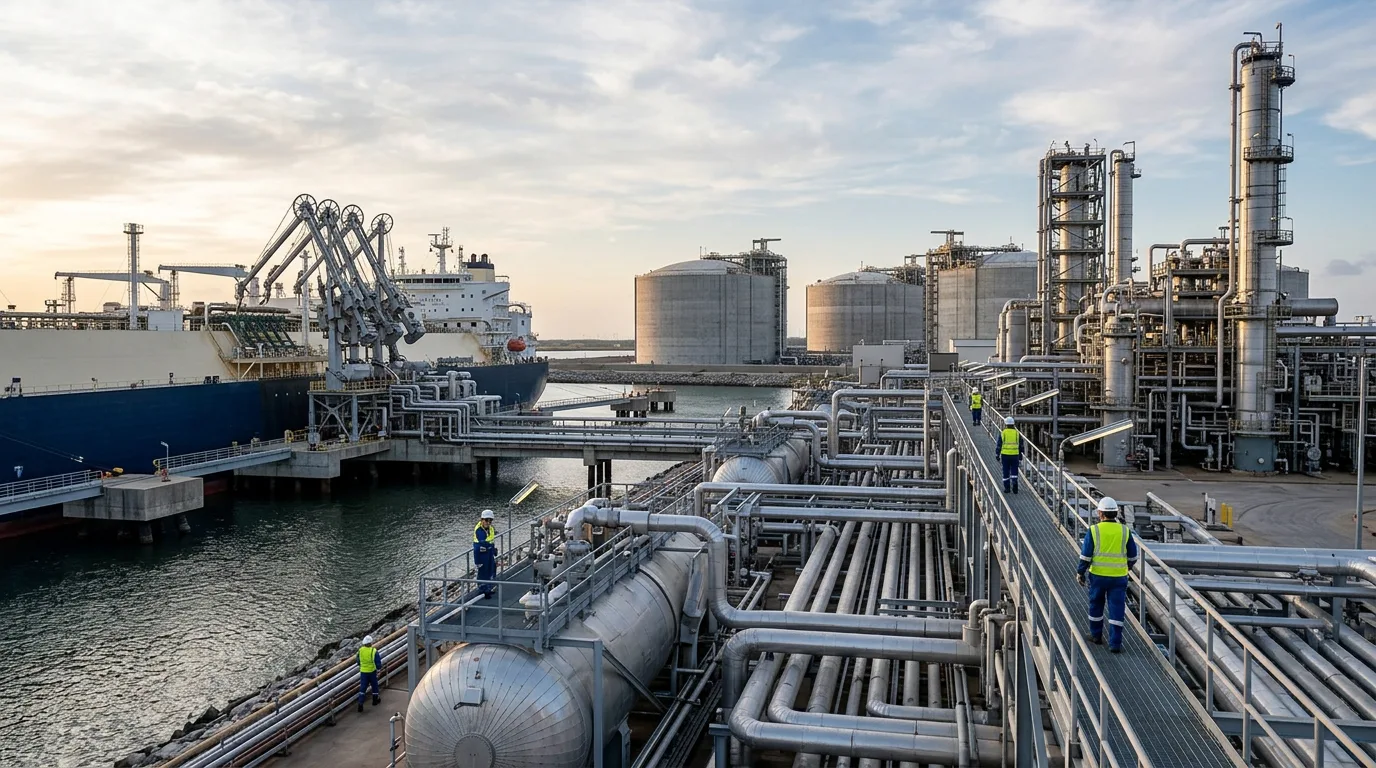
A March Iranian strike on Qatar's Ras Laffan complex took 17% of the country's LNG export capacity offline, and nearly seven months into the war the Strait of Hormuz remains difficult to transit. An Oilprice analysis argues the market response initially looked straightforward: buy shares in American exporters and wait for European and Asian buyers to chase cargoes that can avoid the strait entirely. The piece profiles five natural gas stocks positioned to benefit from that shift in flows.
Cheniere is the most prominent example in the write-up. The company has shipped more LNG than in the comparable period a year earlier and raised its 2026 guidance for the second consecutive quarter, which the article presents as the trade playing out as expected. On that reading, US export terminals are capturing demand from customers who would rather not depend on Hormuz transits for their supply.
The Qatari side of the disruption is far from resolved. According to the report, QatarEnergy has extended force majeure, and the strait itself remains a problem for shipping. That combination keeps European and Asian buyers searching for cargoes that originate outside the Gulf, which is where the American exporters come in.
For the industry, the standoff underlines the geographic split in LNG supply: Qatari cargoes depend on transit through Hormuz, while volumes shipped from the United States do not. As long as the strait stays disrupted and Qatari capacity remains impaired, American exporters are positioned to take up the cargoes Qatar cannot deliver. The article indicates the trade now hinges on how long the force majeure lasts and whether traffic through the strait returns to normal.
Source: Oilprice