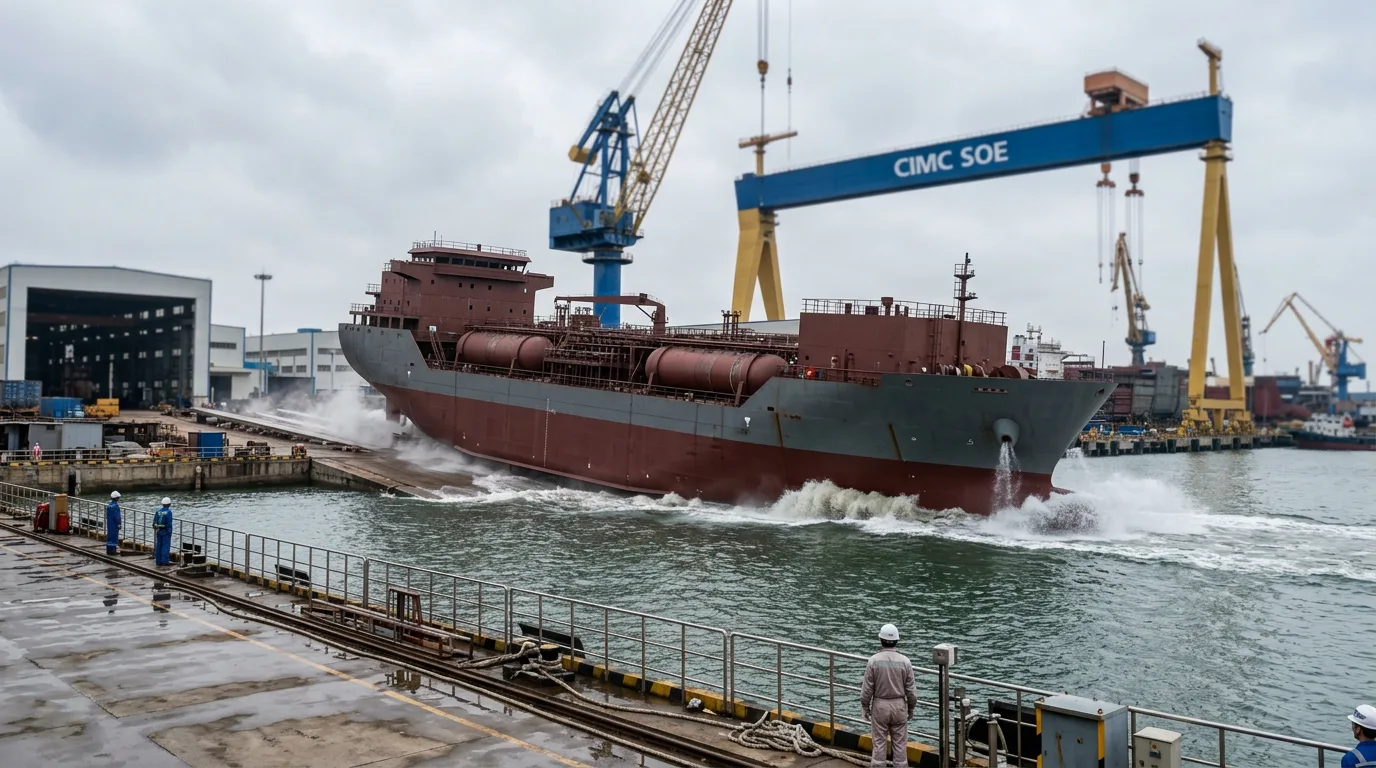
Nantong CIMC Sinopacific Offshore & Engineering (CIMC SOE) has launched a liquefied natural gas (LNG) bunkering and supply vessel for Avenir LNG. The launch marks a milestone in the newbuild's construction, as the hull leaves its building position and takes to the water at the Chinese shipyard. It signals that the project has moved from fabrication toward the later stages of the build process.
An LNG bunkering and supply vessel is designed to combine two related tasks: transferring liquefied natural gas to other ships so they can refuel, and carrying LNG to offtakers such as terminals and industrial users. Vessels of this kind act as the link between LNG sources and the ships and facilities that consume the fuel. Their availability matters to operators of LNG-fuelled ships, which depend on refuelling capacity in the ports they call at. Specifications such as cargo capacity, main dimensions and propulsion arrangements have not been provided.
Launching a hull is not the final step in a ship's construction. Once the vessel is afloat, work typically continues on outfitting, systems installation, testing and commissioning before sea trials and handover to the owner. Until those stages are complete and the ship is delivered, it cannot begin commercial operations.
For Avenir LNG, the vessel is intended to become an operating asset in its bunkering and supply activities once the build is finished. For the shipyard, the launch represents visible progress on a gas-handling newbuild. Vessels of this class form part of the infrastructure that makes LNG available as a marine fuel, and the remaining work at the yard will determine when this unit can take up that role.
Source: LNG Prime