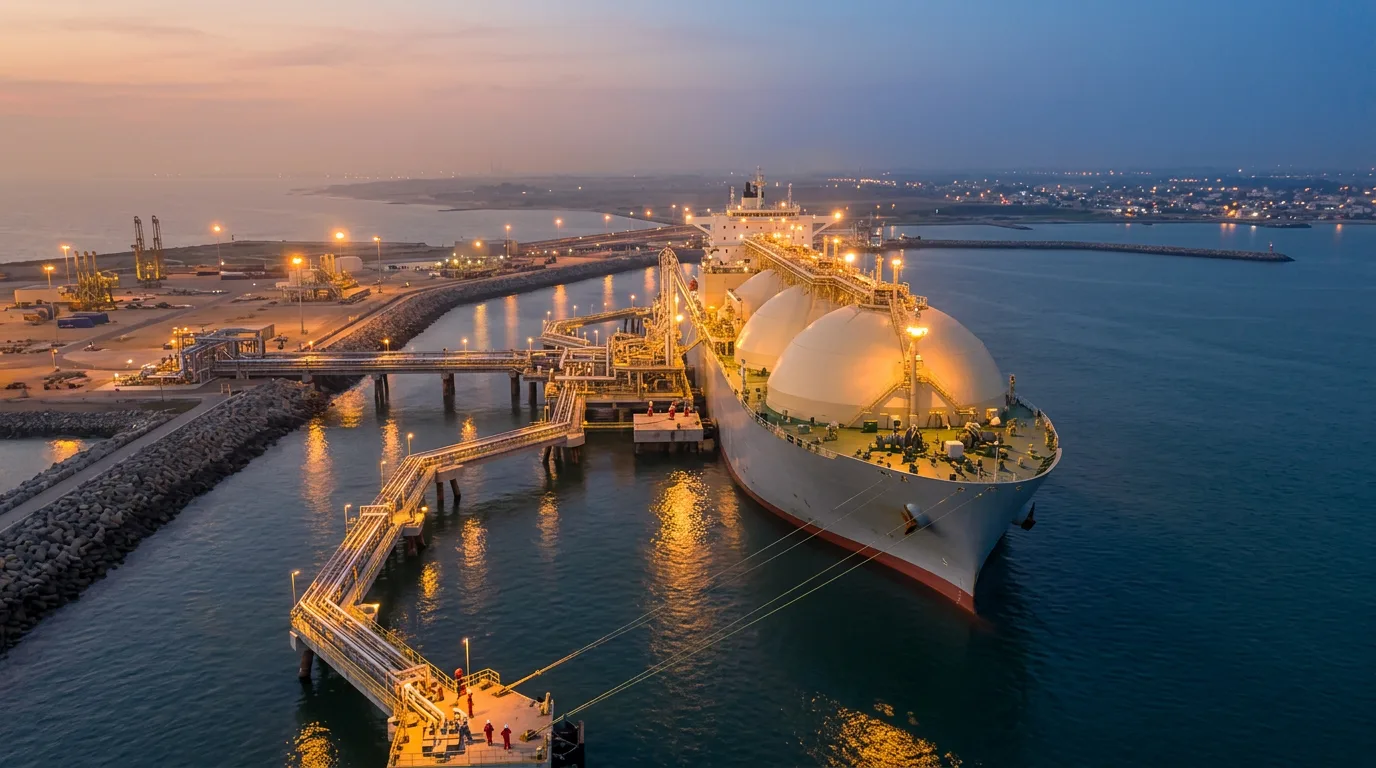
A new floating storage and regasification unit (FSRU) design from Chinese shipyard Jiangnan has been approved by five classification societies. The concept provides 175,000 cubic meters of LNG storage capacity and is built around the shipyard's own type B LNG containment tanks. The approvals mean the design has now been reviewed against the rules of five separate classification bodies.
An FSRU is a vessel that combines LNG storage with regasification capability, allowing a unit to be moored near shore and feed gas into a pipeline network without fixed onshore terminal infrastructure. In this concept the cargo sits in Jiangnan's type B tank system, a containment design the shipyard has developed itself. The 175,000-cbm figure denotes the volume of LNG the unit can hold, which shapes how long it can keep supplying gas between reloadings.
Classification approval is a standard milestone in moving a ship design from the drawing board toward commercial use. Before issuing an approval, a society reviews a concept's structural arrangements, containment system and safety provisions, and owners normally require such sign-off before a design can be built to their class. Approval from five societies means this design has been assessed under several rule sets rather than one.
For LNG importers, FSRUs offer a way to add regasification capacity by deploying a vessel instead of building a shore-based terminal, and the containment system is one of the central engineering choices in such a project. The tanks must hold LNG at cryogenic temperature for the life of the unit while handling the boil-off gas that forms inside them. Type B is one of the established containment categories for LNG carriers and floating units, and basing the design on its own version keeps the technology in Jiangnan's hands.
The approvals give Jiangnan a classed FSRU concept it can put forward for future projects, in a market where importers use such vessels to add flexibility to LNG supply chains. For operators and charterers weighing options, the unit's 175,000-cbm capacity and its type B containment system will be the main technical parameters to compare against competing designs.
Source: LNG Prime