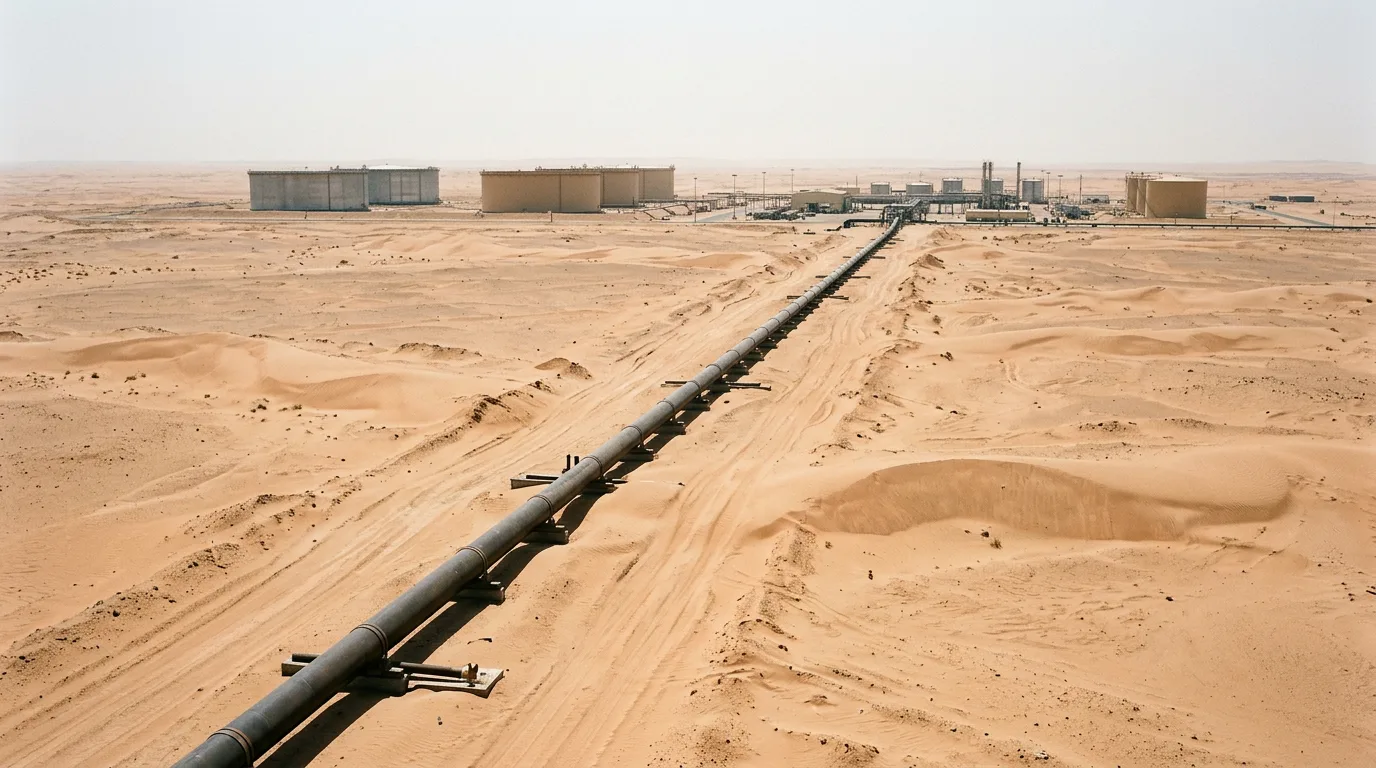
Saudi Arabia plans to raise the capacity of its East-West crude pipeline, widely known as Petroline, to 10 million barrels per day within two to three years, Energy Minister Prince Abdulaziz bin Salman announced at the WPC Energy Congress in Riyadh. The project would add 3 million barrels per day to the 740-mile onshore system, which currently runs at around 5.8 million barrels per day against a maximum capacity of 7 million barrels per day. The minister presented the expansion as a step toward strengthening the kingdom's ability to bypass the Strait of Hormuz.
The pipeline connects the kingdom's primary eastern oil fields to the port of Yanbu on the Red Sea, giving crude an overland route across the Arabian Peninsula that avoids the Strait of Hormuz. Petroline has become a key artery for Saudi crude exports as regional conflicts and disruptions affect traditional maritime shipping lanes, and rerouting cargoes to Yanbu has already reduced the kingdom's reliance on the strait. The additional capacity is intended to reinforce that alternative export corridor.
The Red Sea route carries its own strategic exposure. Iran-aligned Houthi militants in Yemen have previously threatened to target Saudi shipping through the Bab el-Mandeb Strait, the narrow passage connecting the Red Sea to the Gulf of Aden and the main shortcut for Asia-bound cargoes leaving Yanbu. Expanding Petroline would broaden export options, but part of the export chain would still depend on security along the Red Sea corridor.
Speaking to delegates in Riyadh, Prince Abdulaziz emphasized that national energy resilience extends beyond preventing single points of failure. For pipeline and terminal operators, an added 3 million barrels per day of westward takeaway capacity would offer more flexibility to keep crude moving when Gulf shipping is disrupted, and the two-to-three-year timeline sets a defined horizon for the engineering and capacity planning the upgrade will involve.
Source: Pipeline Journal