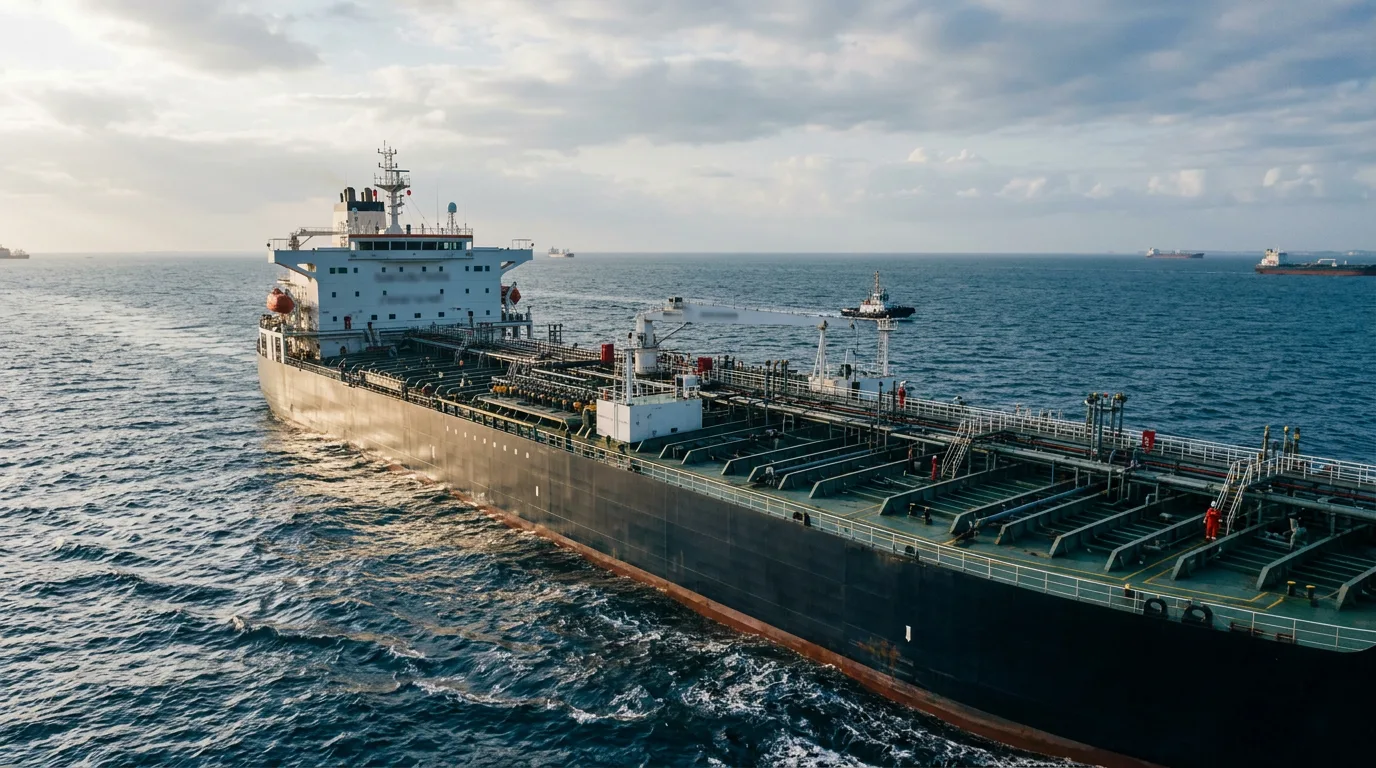
The cost of moving crude oil by sea reached record levels last month as the war involving Iran reshuffled trade routes and left a growing share of the tanker fleet engaged in long, inefficient voyages. Daily hire for the largest crude carriers has climbed to unprecedented heights, turning an oil crisis into a shipping crisis as well.
Supertanker rates on the route from the Persian Gulf to China climbed above $1 million per day in September, a record high for the lane. The figure reflected a market repricing rapidly as the conflict alters established patterns of trade.
The September record did not stand for long. Freight rates added another 40% during the opening week of October, and earnings on the Gulf-to-East-Asia voyage topped $1.4 million per day this week, based on data assembled by Bloomberg. Both figures relate to voyages carrying Gulf crude to Asia.
Behind the numbers is a change in how vessels are employed. The conflict has redrawn established crude flows, and more tankers are tied up in lengthier, less efficient itineraries than before. A ship committed to one of these extended trips is unavailable for other employment while it sails, so each circuitous voyage takes tonnage out of circulation for longer.
For companies chartering tonnage to lift crude from the Gulf, the cost of securing a vessel has become a fast-moving variable rather than a stable line item. With records set in consecutive months on the region's main Asia-bound lanes, freight costs on this scale are now a material component of the economics of every cargo lifted from the Gulf.
Source: Oilprice